As I scoured my pantry for a simple dinner idea, I swiftly unearthed a humble chayote, often overlooked but brimming with potential. Enter Ginisang Sayote, or Sautéed Chayote—the perfect dish that marries convenience with nutrition. This easy recipe cooks up in mere minutes and offers a delightful crunch, making it an ideal choice for both busy weeknights and relaxed weekends. With flavors enhanced by aromatic garlic, fresh tomatoes, and savory ground pork, it’s a dish that’s not just about sustenance; it’s a celebration of unsung ingredients. Plus, it’s an economical meal, allowing you to nourish yourself without breaking the bank. Ready to take your cooking experience to the next level? Let’s dive into this vibrant and satisfying recipe!
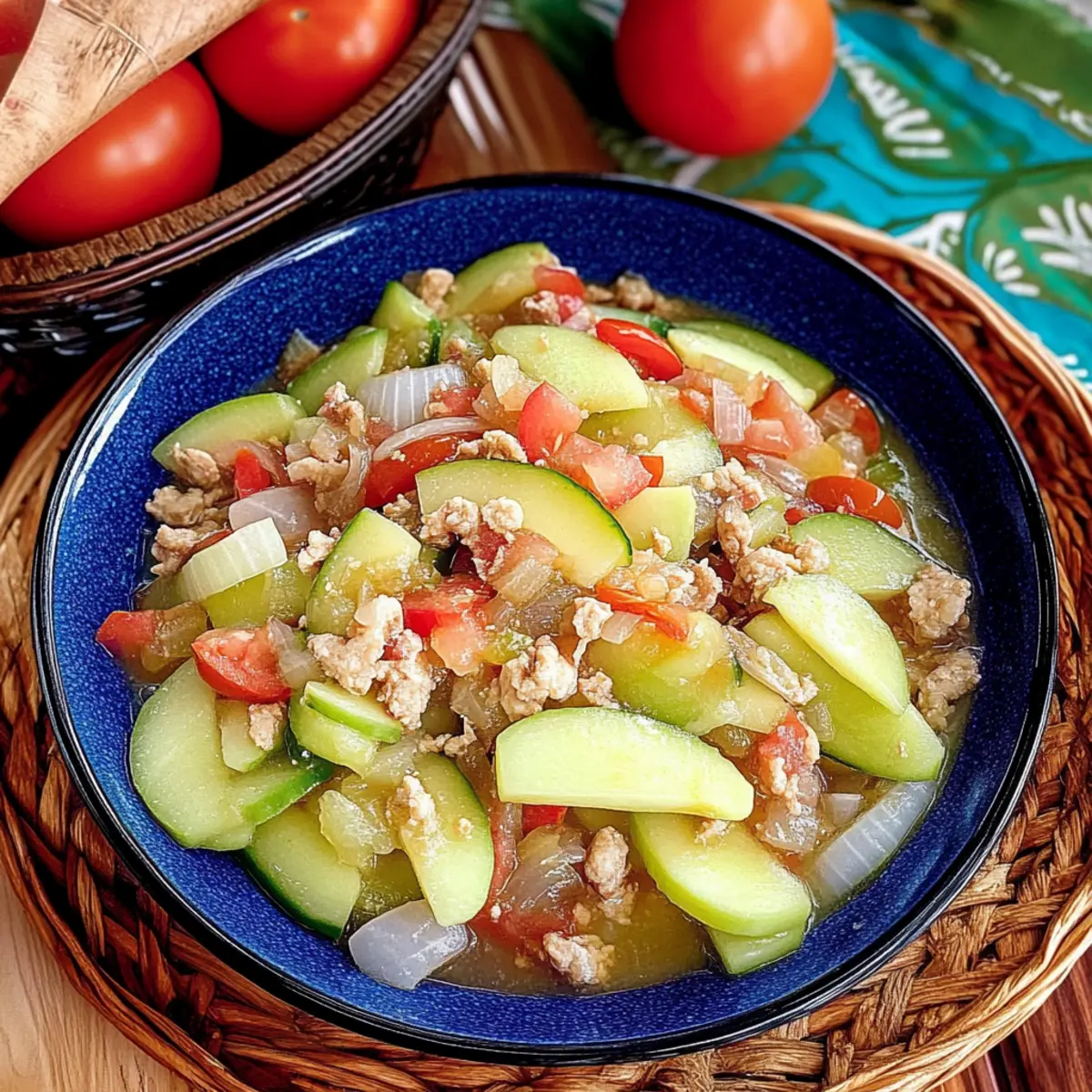
Why is Sautéed Chayote a Must-Try?
Simple Preparation: This Ginisang Sayote demands minimal effort—perfect for those hectic evenings when time is of the essence!
Nutritious Ingredients: Packed with vitamins and fiber, chayote offers a guilt-free way to fill up while savoring delicious flavors.
Versatile Dish: The beauty of this recipe lies in its adaptability. Swap ground pork for tofu or shrimp, or throw in extra veggies to suit your palate!
Crowd-Pleasing Flavor: With the aromatic garlic and sweetness of ripe tomatoes, every bite is a delightful journey, making it a hit at family gatherings.
Budget-Friendly: Economical ingredients ensure you can whip up this dish without straining your wallet—comfort food that won’t break the bank!
Dive into this quick recipe now and experience the thrill of creating something delicious with just a few ingredients.
Sautéed Chayote Ingredients
For the Base
• Sayote (Chayote) – The star of the dish, offering a mild flavor and crunchy texture that makes Sautéed Chayote shine.
• Tomatoes – Adds a lovely sweetness and acidity for balance; use fresh, ripe tomatoes for the best taste.
• Garlic – Delivers aromatic depth; mince it for quicker integration into your dish.
• Onion – Enhances sweetness and adds complexity; slice thinly for even cooking.
For the Protein
• Ground Pork – Provides richness and protein; easily swap this for chicken, beef, or even tofu for a vegetarian twist.
For Flavor
• Fish Sauce – Infuses the dish with umami; substitute with soy sauce for a vegetarian option!
• Salt – Enhances overall flavor; adjust according to your taste preferences.
For Cooking
• Oil – Essential for sautéing; vegetable oil works great for a neutral flavor.
• Water – Helps cook and soften the chayote, ensuring it’s tender.
Step‑by‑Step Instructions for Sautéed Chayote
Step 1: Prepare the Chayote
Start by peeling the sayote (chayote) carefully using a vegetable peeler, ensuring you remove all the skin. Once peeled, slice the chayote into thin pieces for even cooking and to maximize their crunchy texture. To prevent stickiness, soak the slices in water while you prepare the other ingredients, keeping them fresh and ready for sautéing.
Step 2: Heat the Oil
In a medium-sized pan or wok, add about 2 tablespoons of vegetable oil and heat it over medium heat. Allow the oil to warm for roughly 2–3 minutes until it shimmers slightly, indicating that it’s hot enough for sautéing. Keeping the temperature steady ensures that your Ginisang Sayote will be perfectly cooked without burning.
Step 3: Sauté Onions and Garlic
Add the sliced onions to the hot oil and sauté for about 2 minutes, stirring occasionally, until they become translucent and fragrant. Next, toss in the minced garlic, continuing to stir for another minute. The aroma at this point will awaken your senses and set the stage for the delicious sautéed chayote.
Step 4: Add Tomatoes
Introduce the sliced tomatoes to the pan and cook them for 3–5 minutes, stirring gently. As they soften, the tomatoes will release their juices, creating a sweet and tangy base for your Ginisang Sayote. Continue cooking until the tomatoes are tender but not completely mushy, which should leave them with a vibrant red color.
Step 5: Incorporate Ground Pork
Add the ground pork to the pan, breaking it apart with a spatula to ensure even cooking. Stir this mixture for about 5 minutes until the pork is fully browned and cooked through. The richness of the meat will complement the aromatic vegetables, enhancing the overall flavor of the Sautéed Chayote.
Step 6: Add Fish Sauce
Pour in about 1 tablespoon of fish sauce, stirring well to combine it with the sautéed ingredients. Let this cook for an additional minute, allowing the sauce to infuse a deep umami flavor into your dish. This step is crucial for achieving that signature taste of Ginisang Sayote.
Step 7: Simmer with Water
Pour in approximately ½ cup of water, then cover the pan with a lid. Allow it to simmer for 3–5 minutes on medium-low heat, which will help tenderize the remaining ingredients. You’ll know it’s ready when the mixture bubbles lightly and the vegetables soften without becoming mushy.
Step 8: Add the Chayote
Carefully add the soaked chayote slices to the pan, mixing them gently with the other ingredients. Cover the pan again and let them cook for about 5 minutes, stirring occasionally, until the chayote is tender yet still crisp. This is the moment where the flavors meld beautifully, showcasing your delicious sautéed chayote.
Step 9: Final Touch and Serve
Remove the pan from heat and give the dish a final stir. The vibrant colors should shine through, with the chayote retaining its delightful crunch. Serve your Ginisang Sayote immediately with a side of steamed white rice, taking care to savor the rich flavors you’ve created in this quick and nutritious meal!
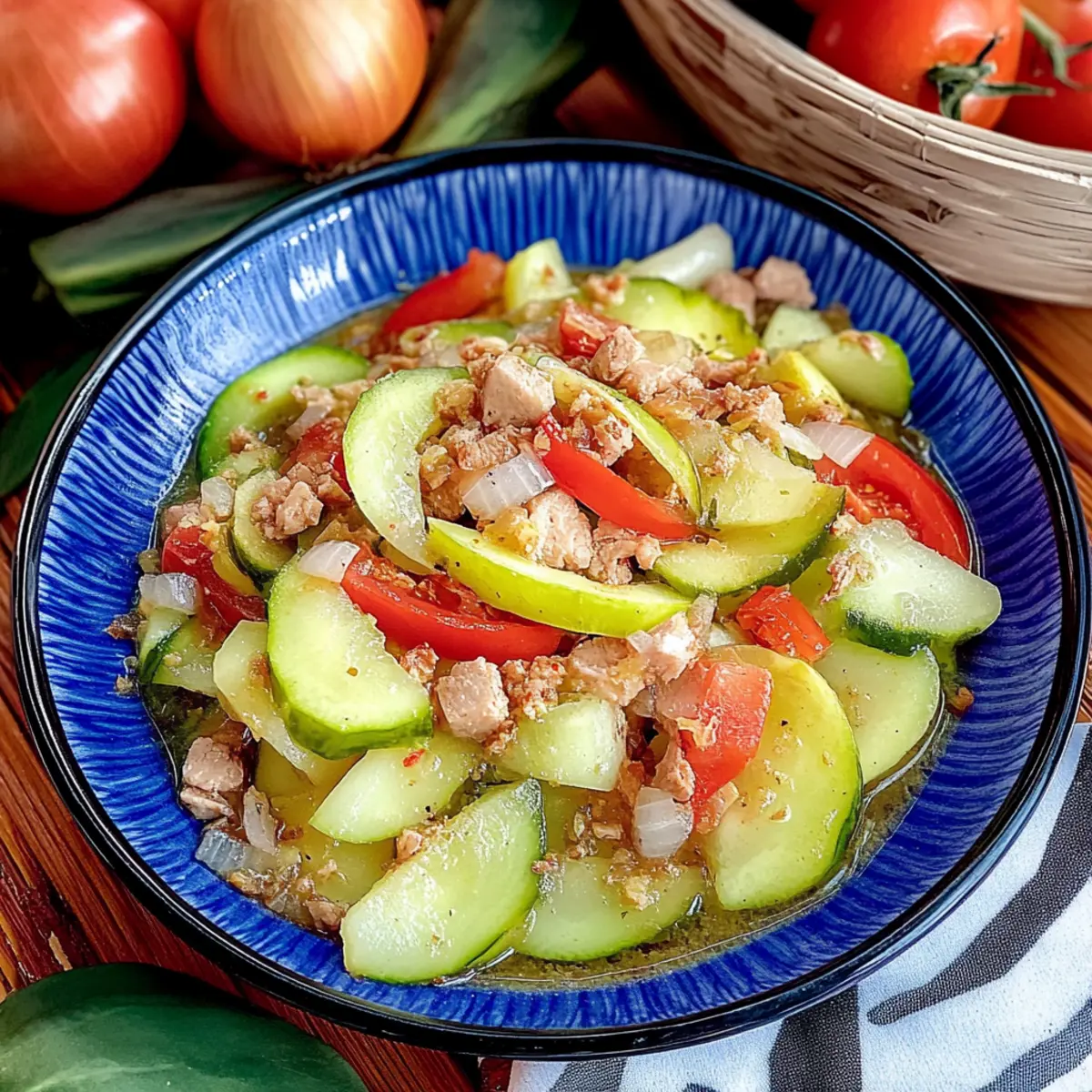
Storage Tips for Sautéed Chayote
Fridge: Store leftover Ginisang Sayote in an airtight container in the refrigerator for up to 3 days. This will help preserve the flavor and prevent it from becoming soggy.
Reheating: When ready to enjoy the leftovers, reheat gently on the stove over low heat or in the microwave until warmed through. This prevents the chayote from becoming too soft.
Freezer: Avoid freezing sautéed chayote, as it alters the texture and taste of the dish. The fresh crunch will be lost, making it less enjoyable when thawed.
Serving Tip: Serve freshly made Sautéed Chayote for the best experience; it’s meant to be enjoyed hot and crisp!
Make Ahead Options
Ginisang Sayote is a fantastic recipe for meal prep, saving you precious time during busy weeknights! You can chop your chayote, onions, and tomatoes up to 24 hours in advance; simply store them separately in airtight containers to keep them fresh. Additionally, you can sauté the onions and garlic, then refrigerate them, which allows the flavors to deepen—this will last up to 3 days. To maintain quality, avoid adding the chayote until you are ready to cook, as this will preserve its delightful crunch. When ready to serve, just follow the final steps by incorporating the refrigerated ingredients, and you’ll have a delicious Ginisang Sayote on the table in minutes!
What to Serve with Ginisang Sayote?
Picture this: a colorful plate of Ginisang Sayote at the center of your dining table, surrounded by delightful sides that harmonize beautifully with its flavors.
- Steamed White Rice: The ultimate companion, offering a fluffy base that soaks up the savory sauce and elevates each bite of the sautéed chayote.
- Grilled Chicken: A simple grilled chicken with citrus seasoning complements the crunchiness of the chayote while introducing a juicy, tender contrast to your meal.
- Crispy Fried Tofu: For a vegetarian twist, pairing the dish with crispy fried tofu provides a lovely texture and makes the meal even more satisfying.
- Sautéed Green Beans: Their tender-crisp bite adds freshness and enhances the vibrant colors on your plate, marrying well with the sautéed chayote.
- Tomato Salad: A side of simple tomato salad, lightly dressed, can amplify the dish’s tomato flavors and offer a refreshing finish to your meal.
- Chili Garlic Sauce: A small bowl of chili garlic sauce on the side brings a spicy kick that pairs excellently with the savory notes of Ginisang Sayote, adding a fun twist.
- Coconut Water: To wash it down, coconut water provides a light, refreshing beverage that balances the flavors of your meal with a touch of sweetness.
Sautéed Chayote Variations & Substitutions
Feel free to get creative with this delightful dish, adding your own twist to make it even more enjoyable!
-
Vegan Delight: Swap ground pork for crumbled tofu or tempeh for a protein-packed vegetarian option. Both provide a satisfying bite and soak up the flavors beautifully.
-
Spicy Kick: Sprinkle in some red chili flakes or diced jalapeños to add heat. It elevates the dish, giving you that exciting punch with every mouthful.
-
Zucchini Twist: If chayote isn’t available, use zucchini instead. It offers a similar texture and will absorb the savory flavors just as well.
-
Sweet Peppers: Incorporate bell peppers for a pop of color and sweetness. They’ll not only enhance the visual appeal but also add a wonderful crunch.
-
Herb Boost: Fresh herbs like cilantro or basil can take the flavor profile to a new level. Toss them in at the end for a fragrant finish.
-
Coconut Cream: For a richer experience, add a splash of coconut cream during the cooking process. This adds a silky texture and a subtle sweetness that pairs wonderfully with the chayote.
-
Umami Upgrade: Replace fish sauce with oyster sauce or mushroom soy sauce for a different depth of flavor. This can bring a delightful umami punch to your sautéed chayote.
Whether you want to switch flavors, adjust textures, or cater to dietary needs, these simple variations invite you to explore and personalize your Sautéed Chayote experience!
Expert Tips for Sautéed Chayote
Perfect Peeling: Rub a small amount of oil on your hands before peeling sayote to minimize stickiness and make it easier to handle.
Cook with Care: Keep the heat at medium to avoid burning the garlic; a gentle sauté enhances the aromatic flavors without bitterness.
Don’t Rush the Chayote: Ensure you don’t overcrowd the pan with chayote slices; this allows even cooking and helps retain that delightful crunch in your sautéed chayote.
Fresh Ingredients Matter: Use ripe tomatoes and fresh garlic to achieve a vibrant and flavorful dish. Dried or outdated ingredients can dull the taste.
Serve Hot: For the best texture, serve Ginisang Sayote immediately. Letting it sit can lead to sogginess, so enjoy it fresh and warm!
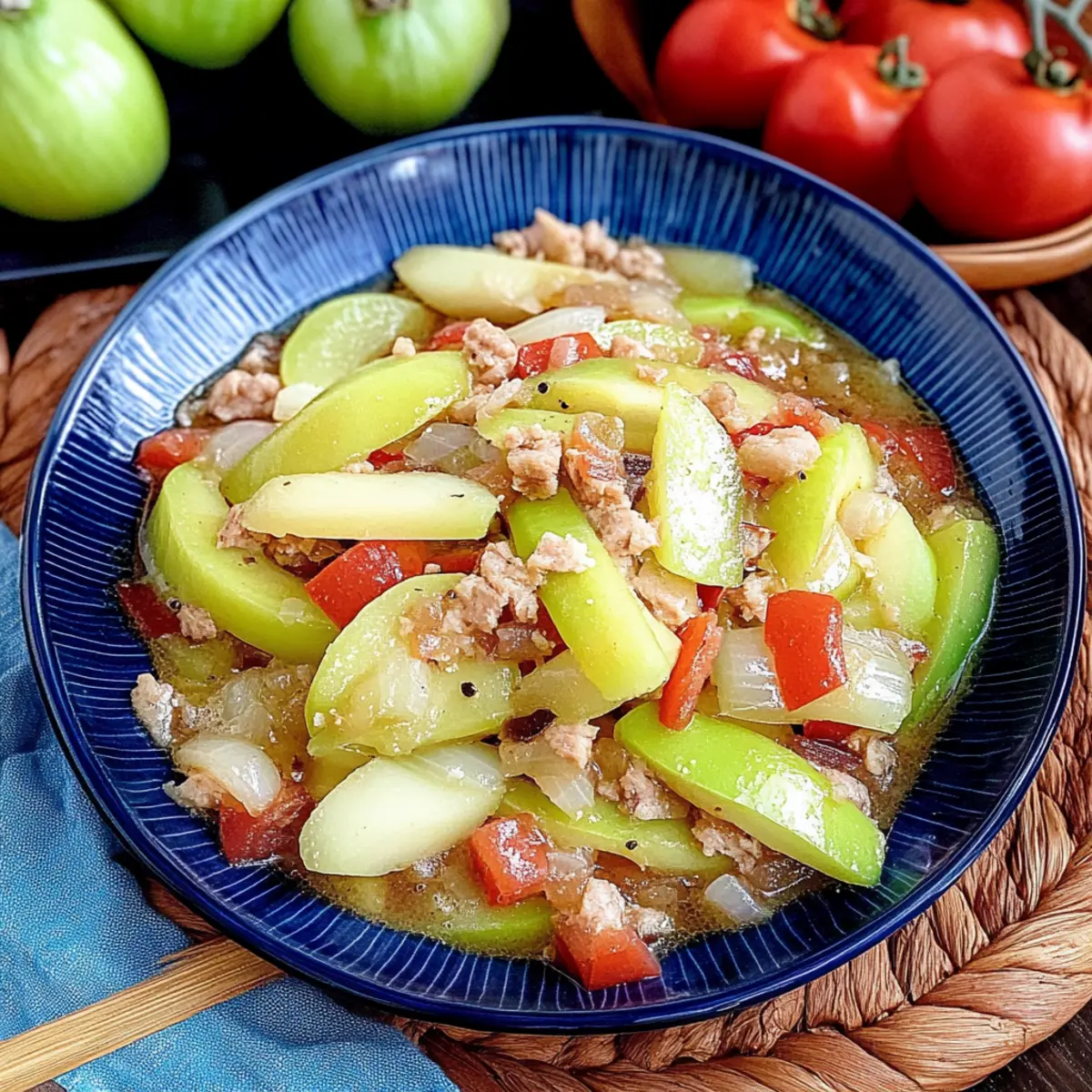
Ginisang Sayote (Sautéed Chayote) Recipe FAQs
How do you select ripe chayote?
Absolutely! When choosing chayote, look for firm, green ones that are free of dark spots or blemishes. A fresh chayote should feel heavy for its size and have a smooth skin; avoid any that look wrinkled or have dark spots all over, as these indicate overripeness.
How should I store leftover Ginisang Sayote?
Be sure to store your leftover Ginisang Sayote in a tightly sealed container in the refrigerator, where it will keep fresh for up to 3 days. When you’re ready to enjoy it again, reheat gently on the stove over low heat or in the microwave until warmed through, ensuring it doesn’t become too soft.
Can I freeze sautéed chayote?
Very! I recommend avoiding freezing sautéed chayote altogether, as the texture and flavor will suffer. If you do need to freeze, prepare chayote slices and blanch them in boiling water for 2-3 minutes before transferring them to an airtight container. They can last up to 3 months in the freezer, but expect changes in texture when thawed.
What should I do if my sautéed chayote turns mushy?
Don’t panic! If your sautéed chayote ends up mushy, it may be due to overcooking. Next time, reduce the cooking time slightly after adding the chayote slices, ensuring they remain tender yet crisp. Keep an eye on them while cooking, and remember that chayote should still have a slight crunch.
Is Ginisang Sayote safe for my pet?
Absolutely! Chayote is non-toxic to pets; however, any additional seasonings or ingredients, such as fish sauce or garlic, may not be pet-friendly. Always keep portions small and avoid serving it with added spices; fresh, plain chayote is a safe choice for your furry friends.
Can I make Ginisang Sayote vegan?
You definitely can! To make a vegan version of this dish, simply swap the ground pork with a plant-based protein like tofu or tempeh. Also, substitute fish sauce with soy sauce or liquid aminos for a similar umami flavor. Add extra veggies, such as bell peppers or carrots, to enhance both flavor and nutrition!
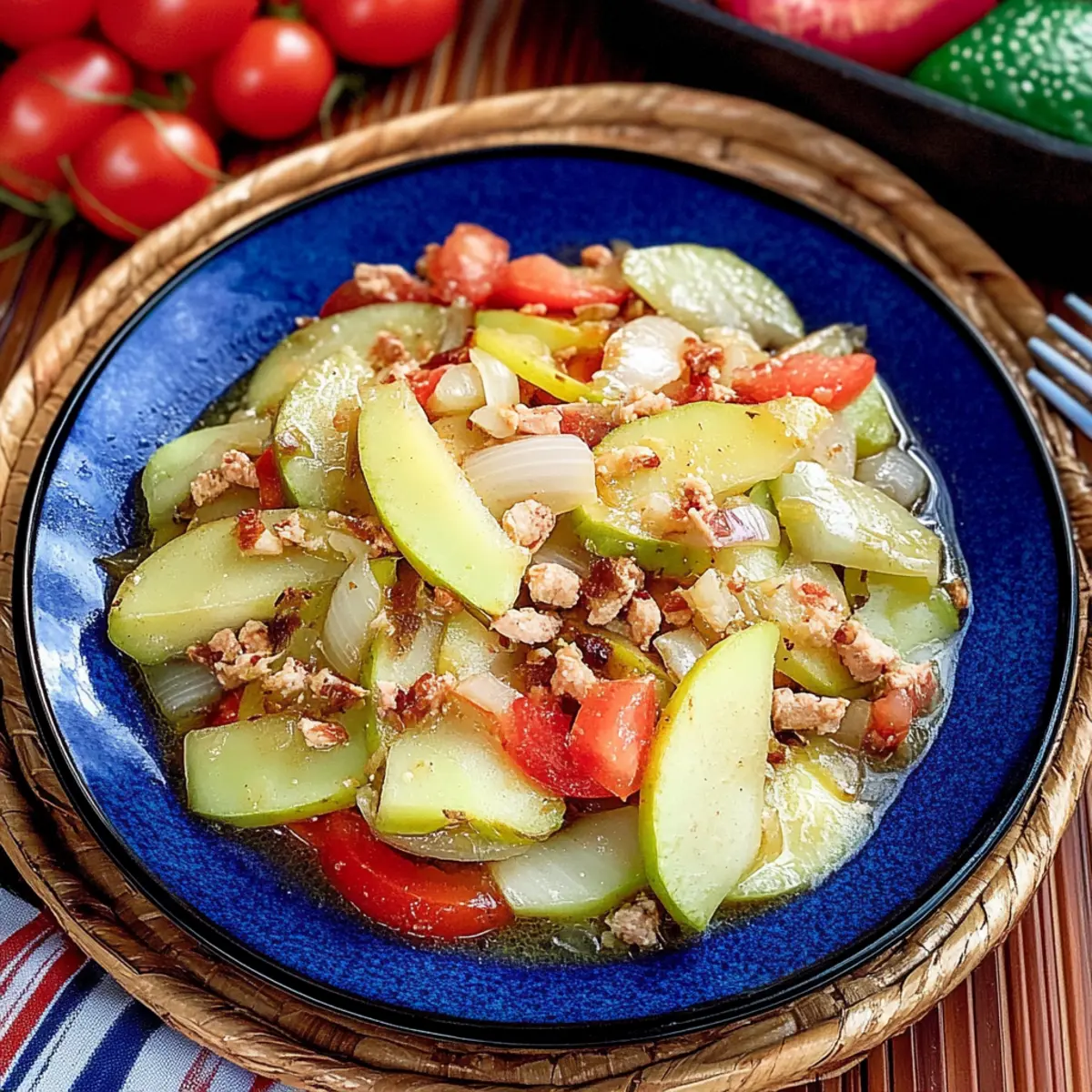
Sautéed Chayote: Quick and Crunchy Comfort Food Delight
Ingredients
Equipment
Method
- Peel the chayote carefully using a vegetable peeler, then slice it into thin pieces and soak in water.
- Heat 2 tablespoons of vegetable oil in a pan over medium heat for about 2–3 minutes.
- Sauté the sliced onions in the hot oil for about 2 minutes until translucent; add minced garlic and stir for 1 minute.
- Add the sliced tomatoes, cooking for 3–5 minutes until tender but not mushy.
- Incorporate the ground pork, stirring for about 5 minutes until fully cooked.
- Pour in 1 tablespoon of fish sauce, mixing well and cooking for an additional minute.
- Add approximately ½ cup of water, cover, and simmer for 3–5 minutes.
- Gently add the soaked chayote slices, cover, and cook for about 5 minutes until tender yet crisp.
- Remove from heat, stir, and serve immediately with rice.