

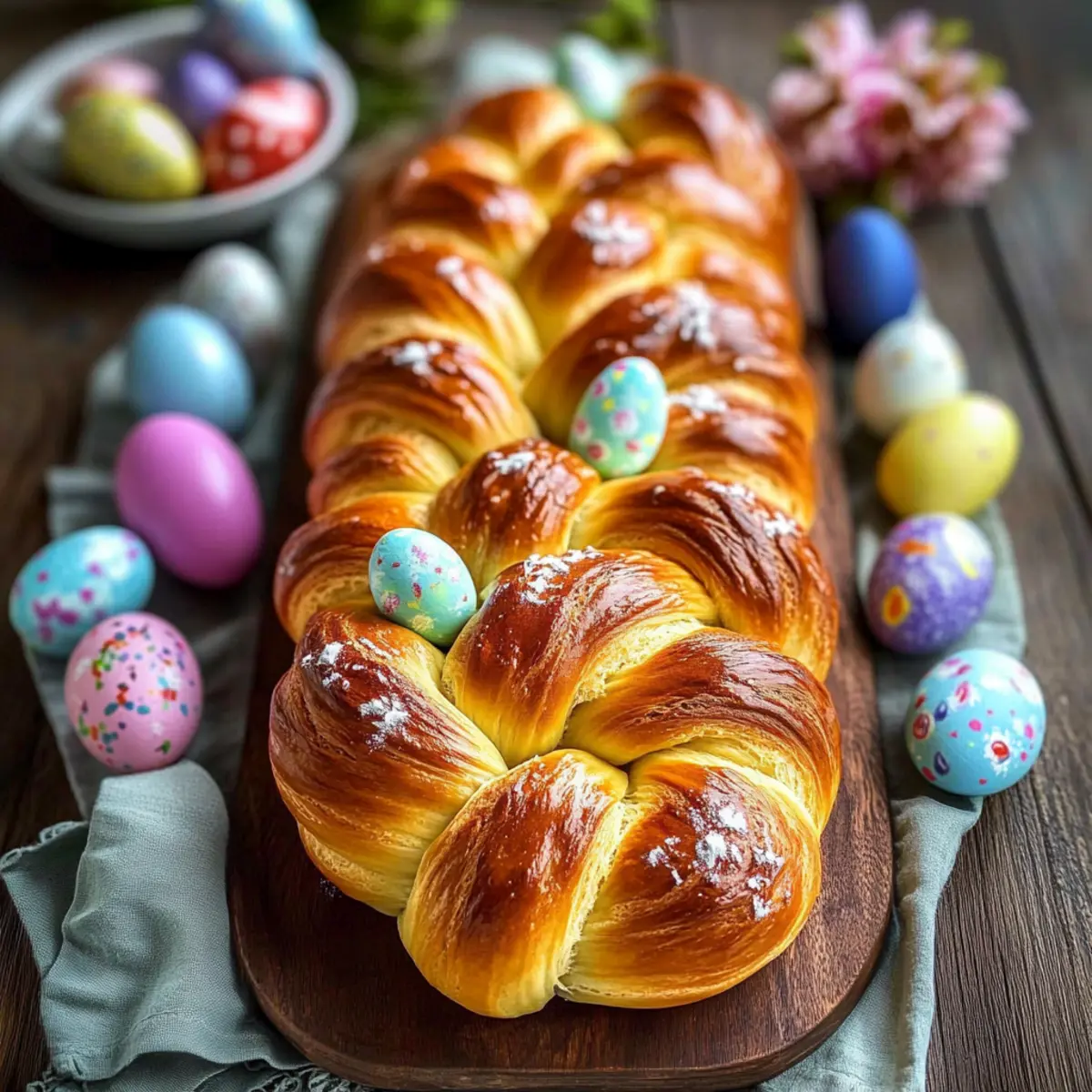
The warm scent of fresh bread wafting through the house can instantly transport me back to my childhood Easters spent with family. When we gathered around the table, the centerpiece was always the Traditional Italian Easter Bread, artfully braided and adorned with colorful, dyed eggs. Not only does this sweet bread make for an eye-catching display, but it’s also a wonderfully soft treat that brings everyone together. It’s incredibly satisfying to create this bread from scratch, and with just a handful of ingredients, you can whip it up in no time. Whether you’re looking for a new family tradition or a delicious way to celebrate the holiday, this Traditional Italian Easter Bread Recipe is sure to kindle the spirit of spring in your kitchen. Are you ready to knead your way into a delicious Easter celebration?

Why Make Traditional Italian Easter Bread?
Easter Tradition: This bread is a beautiful centerpiece that embodies springtime celebrations, making your holiday table truly special.
Easy to Whip Up: With just a few simple ingredients like flour, eggs, and butter, it’s simple enough for any home cook to master.
Delightful Aroma: The gentle scent of citrus fills your kitchen as it bakes, creating an inviting atmosphere for family gatherings.
Versatile Serving: Serve slices with butter or jam for a delightful breakfast, or enjoy it as a sweet treat during your Easter brunch.
Family Connection: Baking this bread allows you to connect with Italian roots and create lasting memories with loved ones, similar to our family’s traditional Italian Lemon Custard dessert!
Traditional Italian Easter Bread Ingredients
For the Dough
• All-Purpose Flour – This is the base of the Traditional Italian Easter Bread, giving it structure and texture.
• Granulated Sugar – Adds sweetness and enhances the overall flavor; feel free to substitute with honey if desired.
• Large Eggs – Essential for enriching the dough and providing binding; ensure they are at room temperature for optimal results.
• Unsalted Butter – Contributes to the richness and tenderness; can be replaced with margarine for a dairy-free option.
• Warm Milk – Activates the yeast and keeps the dough moist; non-dairy milk is a great lactose-free substitute.
• Active Dry Yeast – This key leavening agent is necessary for the bread to rise; make sure it’s fresh for the best outcome.
• Citrus Zest (Lemon or Orange) – Infuses the bread with brightness and refreshing aroma; using organic fruit can help reduce pesticide exposure.
For Decoration
• Dyed Easter Eggs – These colorful eggs symbolize rebirth and are pressed into the bread for a festive touch; hard-boiled eggs can also be enjoyed afterward.
With these ingredients at hand, you’re well on your way to creating a beautiful and delicious Traditional Italian Easter Bread that will bring joy to your spring celebrations!
Step‑by‑Step Instructions for Traditional Italian Easter Bread Recipe
Step 1: Prepare the Dough
Begin by warming 1 cup of milk to about 110°F (43°C) and dissolve 2 tablespoons of active dry yeast in it. Let it sit for about 5–10 minutes until frothy. In a large mixing bowl, combine 4 cups of flour, ½ cup of sugar, 3 large eggs, ¼ cup of melted butter, and the zest of one lemon. Mix until a sticky dough forms, then knead for about 8–10 minutes until smooth and elastic.
Step 2: First Rise
Transfer the kneaded dough into a lightly greased bowl, cover it with a clean kitchen towel or plastic wrap, and place it in a warm spot. Allow the dough to rise until it doubles in size, which should take about 1 to 2 hours. You’ll know it’s ready when you gently press it, and the indentation remains.
Step 3: Shape the Loaf
Once the dough has risen, punch it down gently and divide it into three equal portions. Roll each piece into a long rope, about 16-18 inches in length. Carefully braid these ropes together on a parchment-lined baking sheet, ensuring each twist is tight but not overly pulled, giving your Traditional Italian Easter Bread a beautiful shape.
Step 4: Add Eggs
Preheat your oven to 350°F (175°C) before proceeding. Gently press a few dyed hard-boiled Easter eggs into the braid, spacing them apart. Make sure to secure them slightly within the dough to ensure they stay in place while baking. This will add a fun and festive touch to your bread.
Step 5: Final Rise
Cover the braided loaf with a kitchen towel or plastic wrap once more and allow it to rise again until puffed, which should take about 30–60 minutes. The dough should look softer and slightly expanded, indicating it’s ready for baking — a hallmark of your Traditional Italian Easter Bread.
Step 6: Bake
Before baking, brush the surface of the loaf with an egg wash made from one beaten egg for a golden finish. Place the loaf in your preheated oven and bake for approximately 25–30 minutes, or until the bread is golden brown and sounds hollow when tapped on the bottom.
Step 7: Cool
After baking, remove the bread from the oven and let it cool on a wire rack for at least 30 minutes before slicing. This cooling step is key to achieving the perfect texture and flavor in your Traditional Italian Easter Bread, making it ready for your holiday table.

What to Serve with Traditional Italian Easter Bread?
The joy of a family gathering is enhanced even more when you have the perfect sides to complement your centerpiece dish.
- Creamy Butter: A simple yet elegant choice, spreading rich butter on freshly sliced bread elevates its soft sweetness.
- Fresh Fruit Salad: Bright and juicy seasonal fruits add a refreshing contrast, enhancing the light citrus notes in the bread.
- Honey Glaze: Drizzling a bit of honey over each slice brings sweet and floral tones that beautifully harmonize with the bread’s flavors.
- Savory Cheese Platter: Pair with soft cheeses like ricotta or mascarpone, which offer a delightful creaminess and balance the bread’s sweetness.
- Herbed Cream Cheese: The tang of cream cheese mixed with fresh herbs adds a savory pop, complementing the bread’s sweet flavor profile.
- Turmeric Golden Milk: This warm, spiced drink provides a cozy pairing, making it great for chilly spring mornings with the bread.
- Italian Ricotta Pie: For dessert, this sweet ricotta cake resonates with the theme of Easter celebrations, adding a comforting sweetness to your feast.
- Classic Mimosas: These sparkling drinks bring a festive spirit and citrusy brightness, perfect for a relaxing Easter brunch.
Storage Tips for Traditional Italian Easter Bread
Room Temperature: Keep your Traditional Italian Easter Bread wrapped in plastic wrap or in an airtight container at room temperature for up to 3 days to maintain its freshness and softness.
Fridge: If you want to extend the shelf life, you can refrigerate it, but note that it’ll dry out faster; consume within 5 days for the best flavor and texture.
Freezer: For longer storage, slice the bread and wrap it tightly in plastic wrap, then foil, or use a freezer-safe bag. It can be frozen for up to 3 months without losing its delightful sweetness.
Reheating: To enjoy, simply thaw at room temperature, then warm in the oven at 350°F (175°C) for about 10 minutes, bringing back that soft, freshly-baked taste.
Tips for the Best Traditional Italian Easter Bread
-
Precision Matters: Measure flour by weight for accuracy, aiming for around 500 g (4 cups). This helps achieve the perfect dough consistency.
-
Watch the Dough: If it feels dry, consider adding a tiny bit more liquid. Adjustments can make all the difference in maintaining softness.
-
Longer Rise: Don’t rush the first rise; more time allows the dough to absorb fats properly, resulting in a fluffier Traditional Italian Easter Bread.
-
Eggs Placement: When adding dyed eggs, gently press them into the dough to ensure they stay decorated and intact during baking without rolling away.
-
Covering Technique: Keep the dough covered while it rises to prevent it from drying out. A simple kitchen towel works wonders!
Traditional Italian Easter Bread Recipe Variations
Feel free to get creative and customize this delightful Italian Easter bread to suit your family’s taste buds!
-
Citrus Swaps: Use different zests (like orange or lime) to create unique flavor profiles. The brightness can elevate the bread’s appeal even further.
-
Naughty Nuts: Add chopped nuts like almonds or pistachios to the dough for a delightful crunch and added depth.
-
Dried Fruit: Incorporate dried fruits like currants or raisins into the dough for bursts of sweetness that will put a smile on everyone’s face.
-
Vegan Option: Swap eggs with flaxseed meal and use coconut oil or vegan butter to make this treat entirely plant-based. It can still capture festive spirit!
-
Fun Toppings: Top the bread with colorful sprinkles or a simple glaze to give it a festive flair that kids will adore. Decorating is part of the joy!
-
Savory Twist: Try adding herbs like rosemary or thyme in place of the citrus zest for a savory version. Perfect for an unconventional holiday twist!
-
Protein Boost: Mix in some cottage cheese or Greek yogurt into the dough for extra protein and a tender texture. You can transform the bread into a hearty snack.
-
Experiment with Fillings: Add chocolate chips or a thin layer of cream cheese in the center before braiding to create an indulgent surprise inside!
Let your imagination soar with these variations! And if you’re looking for more delicious inspiration, try out my family-favorite Cottage Cheese Flatbread Pizza or treat yourself to some rich Cookies Cream Cookies. Happy baking!
Make Ahead Options
These Traditional Italian Easter Bread are perfect for busy home cooks looking to save time in the kitchen! You can prepare the dough up to 24 hours in advance—just mix and knead as instructed, then cover and refrigerate it instead of letting it rise. The next day, take it out to come to room temperature, shape the loaf, and let it rise again for 30-60 minutes before adding the dyed eggs. Alternatively, you can already shape the braided loaf and cover it for the final rise in the fridge for up to 3 days, allowing the flavors to develop beautifully. Simply bake it fresh on Easter morning for restaurant-quality results with minimal effort—your family will be thanking you!

Traditional Italian Easter Bread Recipe FAQs
What is the best way to select ingredients for this recipe?
Absolutely! When choosing your ingredients, look for all-purpose or bread flour that feels fine and soft to the touch. For eggs, select large ones and check for freshness by placing them in water; fresh eggs will sink, while older ones float. For citrus zest, I recommend using organic lemons or oranges to minimize pesticide exposure!
How should I store my Traditional Italian Easter Bread?
Store your bread wrapped in plastic wrap or in an airtight container at room temperature for up to 3 days. This keeps it fresh and soft for your holiday gatherings. If you choose to refrigerate it for slightly longer storage, consume it within 5 days to retain the best flavor and texture.
Can I freeze the Traditional Italian Easter Bread? How?
Yes, indeed! To freeze, first slice the bread for convenience. Wrap each slice tightly in plastic wrap, then place them in a freezer-safe bag or container. This helps prevent freezer burn and keeps them fresh for up to 3 months. When you’re ready to indulge, thaw at room temperature, and warm in the oven at 350°F (175°C) for about 10 minutes for that freshly-baked taste!
What should I do if my dough is too dry?
Very good question! If you find your dough feels dry or crumbly, add a tiny splash of warm milk or water while kneading, just enough to balance the consistency. Keep your dough covered while it rises to prevent it from drying out further, ensuring it stays moist and elastic.
Can I make this bread dairy-free?
Absolutely! To accommodate a dairy-free diet, simply substitute the unsalted butter with a plant-based margarine, and opt for non-dairy milk (like almond or oat milk) instead of regular milk. This way, you can still enjoy a delicious Traditional Italian Easter Bread without the dairy!
Delightful Traditional Italian Easter Bread Recipe for Spring Celebrations
Ingredients
Equipment
Method
- Warm milk to about 110°F (43°C) and dissolve active dry yeast in it. Let sit for 5-10 minutes until frothy.
- In a large mixing bowl, combine flour, sugar, eggs, melted butter, and citrus zest until a sticky dough forms. Knead for 8-10 minutes until smooth.
- Transfer dough to a greased bowl, cover, and let rise in a warm place until doubled in size, about 1-2 hours.
- Punch down dough, divide into three portions, and roll each into long ropes (16-18 inches). Braid the ropes together on a baking sheet.
- Gently press dyed hard-boiled Easter eggs into the braid, spacing them apart, and secure them within the dough.
- Cover the braided loaf and let it rise again until puffed, about 30-60 minutes.
- Preheat oven to 350°F (175°C). Brush loaf with egg wash and bake for 25-30 minutes until golden brown.
- Remove from oven and cool on a wire rack for at least 30 minutes before slicing.