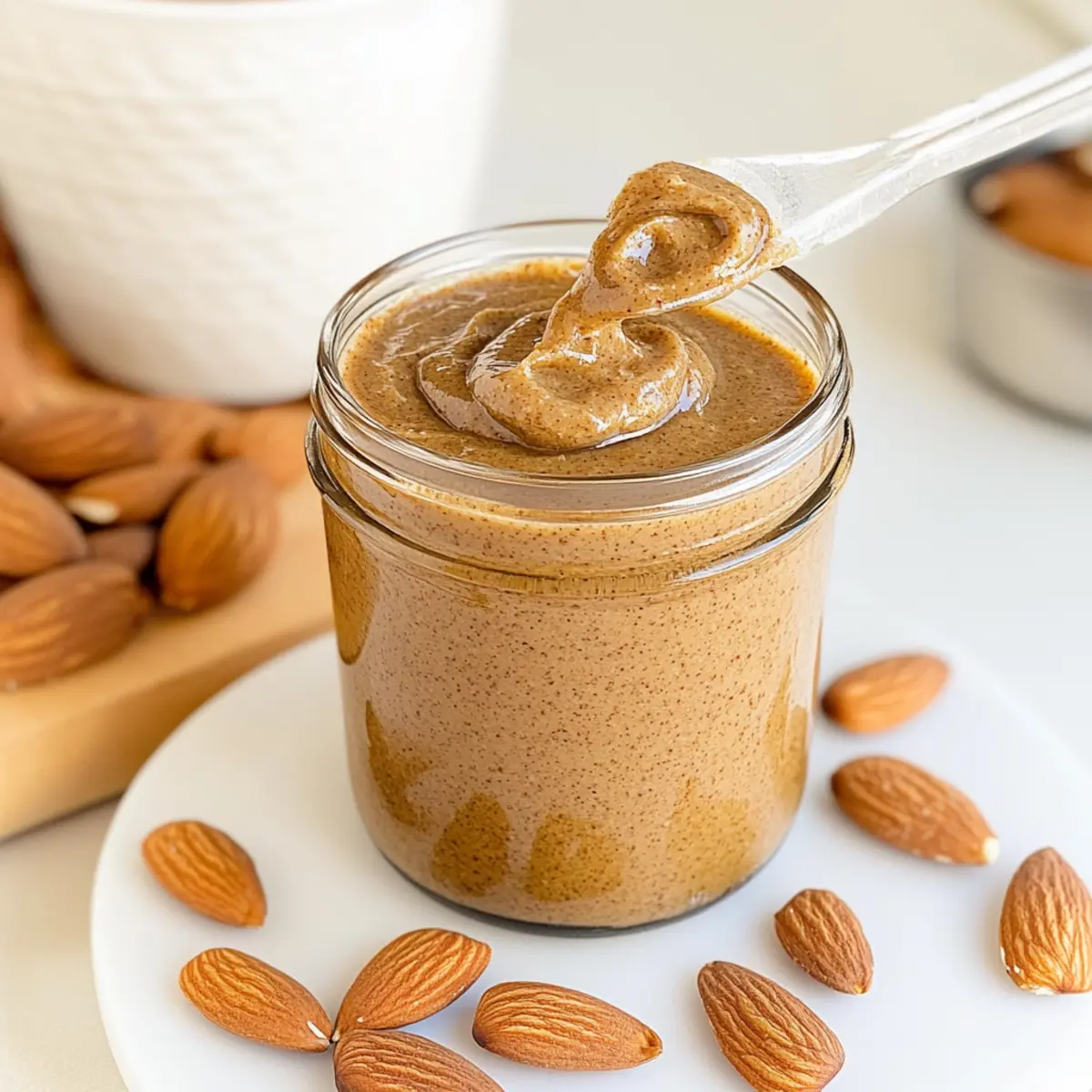
As I stood in my kitchen recently, the aroma of freshly roasted almonds wafted through the air, instantly transporting me to cozy afternoons spent enjoying homemade treats. It was the perfect moment to whip up some almond butter—an inviting blend that is not only a treat for the taste buds but also a wonderful way to elevate your breakfast game. This Easy Homemade Almond Butter recipe is a must-try, featuring just one ingredient and ready in a mere 10 minutes! Whether you’re looking for a healthier option for your snacks or a creamy, guilt-free addition to your smoothies, this delectable spread is here to save the day. Plus, you can easily jazz it up by making chocolate almond butter or a mixed nut variation. Who knew something so simple could make such a delicious difference in our everyday meals? Curious to see how this turns out? Let’s get blending!
Why Make Homemade Almond Butter?
Ease: Making almond butter is a breeze with just one simple ingredient—raw almonds! You’ll be amazed at how quickly it transforms into a creamy spread in under 10 minutes.
Purely Delicious: Experience the rich, nutty flavor that store-bought versions can’t match, providing a wholesome alternative for snacks and meals.
Versatile Twist: Feeling adventurous? Try chocolate almond butter by blending cocoa powder into your mix, or create a delightful mixed nut butter to please every palate.
Healthy Choice: Almond butter is not just tasty but also packed with nutrients, making it a nutritious addition to your diet. Spread it on toast or swirl it into smoothies like in my other recipes, such as Garlic Butter Chicken or Loaded Butterscotch Cheesecake.
Crowd-Pleaser: Whether you’re entertaining guests or just enjoying a quiet moment, this almond butter is sure to impress everyone. Get ready to elevate your culinary creations!
Almond Butter Ingredients
For the Almond Butter
- Raw Almonds – The star ingredient providing that creamy texture and rich flavor; feel free to substitute with roasted almonds for a bolder taste!
Optional Add-ins
- Cocoa Powder – Perfect for crafting chocolate almond butter; just blend it in after reaching a smooth consistency for a delightful twist.
- Blending Oil – Consider adding a tablespoon of avocado oil if your almond butter needs a creamier texture; it enhances richness without overpowering the flavor.
With only these ingredients, your homemade almond butter will not only satisfy your cravings but will also be a wholesome addition to your meals!
Step‑by‑Step Instructions for Almond Butter
Step 1: Preheat the Oven
Start by preheating your oven to 350°F (180°C). This step is vital to enhance the flavor of your almonds. Make sure the oven is fully heated before proceeding to ensure even roasting. A warm kitchen will also help set the stage for a delightful homemade almond butter.
Step 2: Roast the Almonds
Spread your raw almonds evenly on a baking sheet and place them in the preheated oven. Roast them for about 6-8 minutes, watching carefully until they turn a light golden brown. You’ll know they’re ready when they release a nutty aroma. Remove them from the oven and let them cool slightly before moving on to blending.
Step 3: Blend the Almonds
Transfer the cooled almonds into a powerful food processor. Begin blending at a medium speed, scraping down the sides as needed. Patience is key here; blend for 10-15 minutes. Initially, the texture will resemble almond meal, but don’t worry—the natural oils will eventually release and transform it into smooth almond butter.
Step 4: Monitor the Processor
Keep an eye on your food processor during blending, as it may get warm. If you notice it overheating, pause for a minute or two to let it cool down. This precaution ensures that your machine functions well and prevents any risk of damage. Your almond butter journey is almost at its creamy peak!
Step 5: Achieve the Perfect Consistency
Once the almond butter reaches a creamy consistency, take a moment to taste it. If it’s too thick for your liking, consider adding a tablespoon of blending oil, like avocado oil, to achieve a smoother texture. Blend for another minute or two until fully combined, creating a delightful almond butter that rivals store-bought versions.
Step 6: Transfer and Store
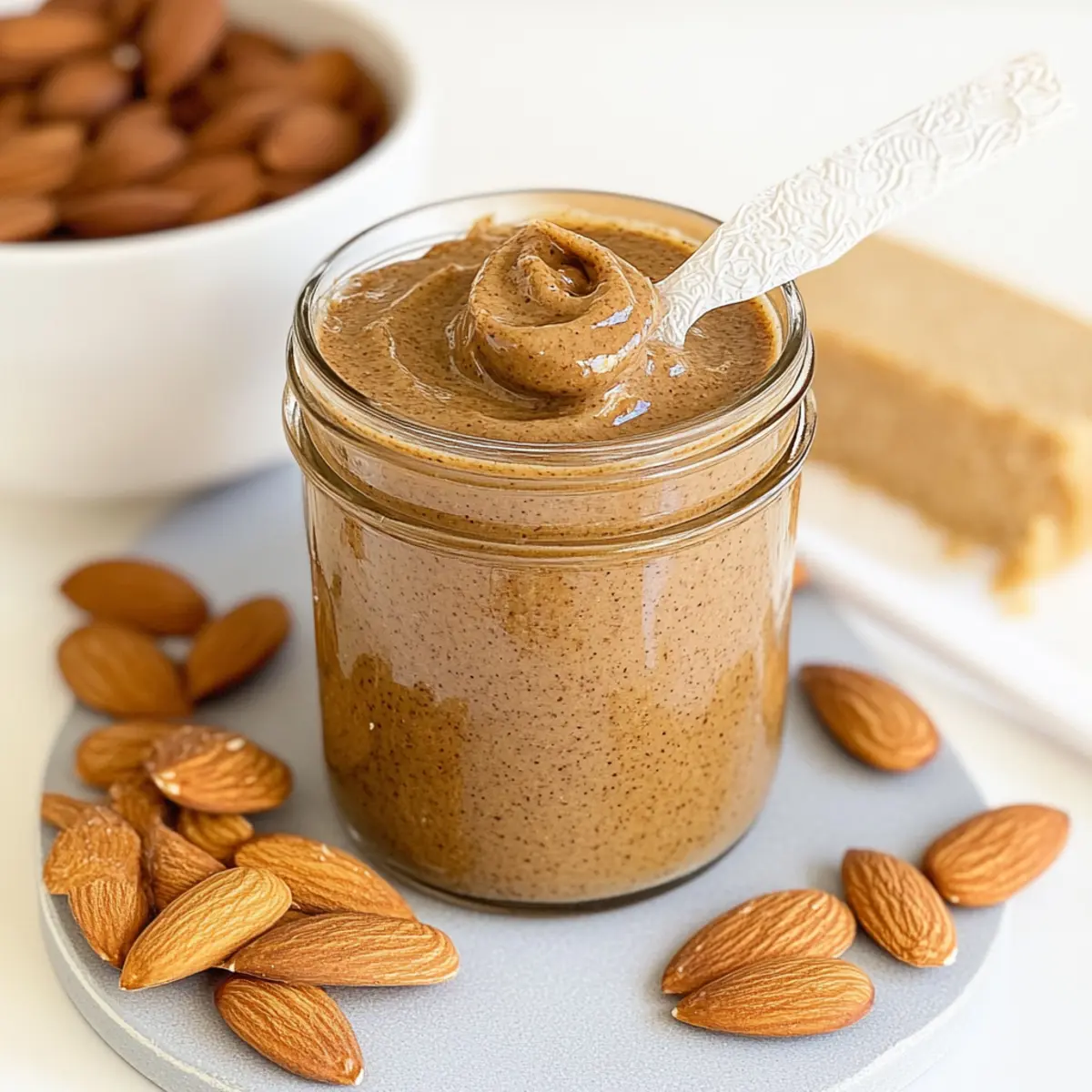
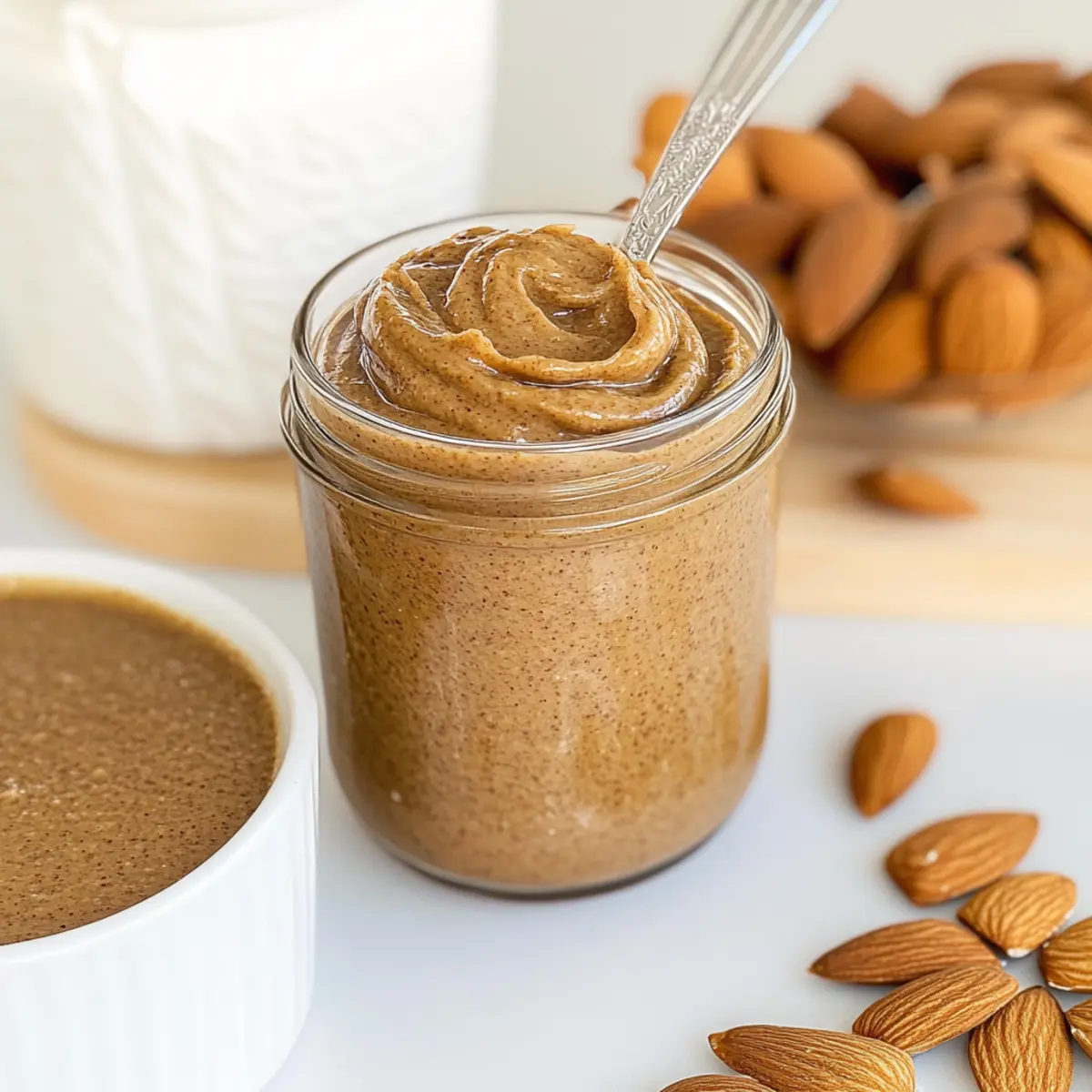
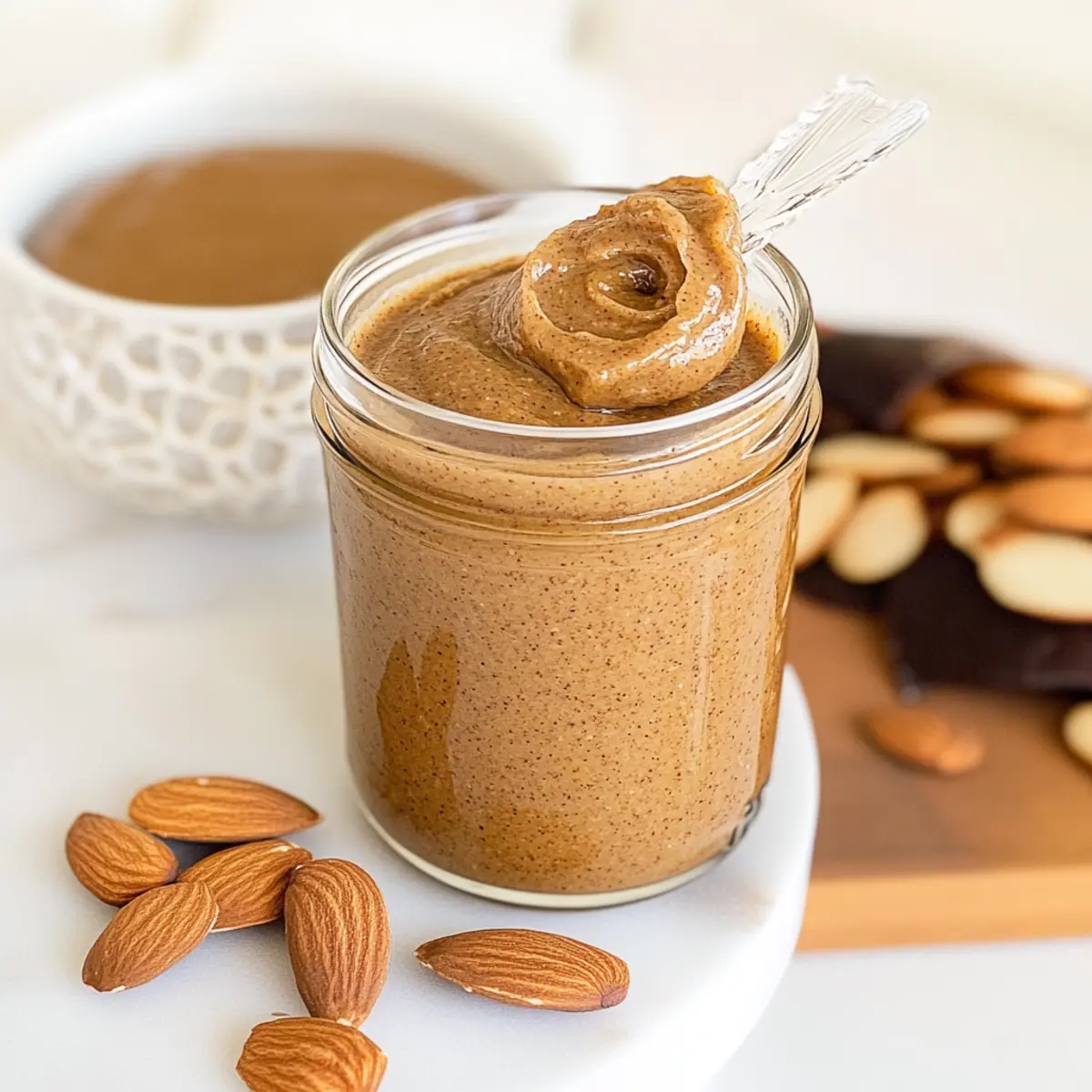
After blending, pour your freshly made almond butter into a clean, airtight glass jar. Allow it to cool slightly before sealing the jar, which helps maintain its creamy texture. Store your homemade almond butter at room temperature for up to 3 months, ensuring easy access for spreading or adding to your favorite recipes.
What to Serve with Easy Homemade Almond Butter
Imagine indulging in creamy goodness that enhances each bite of your breakfast or snack, creating a fulfilling meal experience.
-
Whole Grain Bread:
The nutty flavor of almond butter spreads beautifully on warm, toasted whole grain bread. It’s a hearty start to your day. -
Fresh Fruit Slices:
Pair with apple or banana slices for a fresh, crunchy contrast. The natural sweetness complements the almond butter perfectly! -
Greek Yogurt:
Swirl almond butter into creamy Greek yogurt for a protein-packed snack. It’s a delightful balance of textures and flavors. -
Smoothies:
Blend almond butter into your favorite smoothie for a rich, nutty flavor that adds creaminess and sustains energy throughout your day. -
Granola Bowls:
Top your homemade granola bowl with a scoop of almond butter. The combination of crunch and creaminess is simply irresistible. -
Oatmeal:
Stir into warm oatmeal for a deliciously satisfying breakfast that boosts flavor and nutrition, creating a warm hug in a bowl. -
Chia Pudding:
Add almond butter to chia pudding for an extra layer of flavor and creaminess. It’s a deliciously healthy, filling treat. -
Homemade Cookies:
Use almond butter in your favorite cookie recipes for a rich twist on classic flavors, making every bite more indulgent. -
Hot Chocolate:
Consider a spoonful of almond butter in your hot chocolate. It creates a luxurious, nutty richness that’s hard to resist.
Make Ahead Options
These Easy Homemade Almond Butter is perfect for meal prep enthusiasts! You can roast the almonds up to 24 hours in advance; just allow them to cool completely before storing in an airtight container at room temperature. This will enhance their flavor while ensuring they remain fresh. You can also blend the almond butter up to 3 days ahead of time; simply transfer it into a glass jar and seal tightly. To maintain its creamy texture, avoid refrigerating it, as cold can cause it to harden. When you’re ready to serve, give the jar a good stir and enjoy restaurant-quality almond butter with minimal effort!
Almond Butter Variations & Substitutions
Feel free to get creative with your almond butter and make it truly your own with these easy twists!
-
Chocolate Almond Butter: Blend in cocoa powder after achieving a smooth consistency to enjoy a deliciously chocolatey spread. Imagine thick, creamy chocolate goodness that can brighten your mornings!
-
Mixed Nut Blend: Add hazelnuts, walnuts, or cashews when blending for a delightful mixed nut butter with complex flavors. This variation brings an exciting twist to your lattes or oatmeal!
-
Maple Almond Butter: Drizzle in pure maple syrup while blending for a touch of sweetness that enhances the nutty flavor beautifully. It adds a cozy, comforting aroma that fills your kitchen.
-
Spiced Almond Butter: Incorporate a pinch of cinnamon or nutmeg for a warm, spicy note that complements the almond flavor. Perfect for spreading on toast or stirring into oatmeal for a hearty boost!
-
Savory Twist: Add a dash of sea salt and a sprinkle of smoked paprika for a savory almond butter that pairs beautifully with crackers and cheese. Who knew nut butter could be so versatile?
-
Coconut Almond Butter: Mix in unsweetened shredded coconut for a tropical twist that adds sweet, chewy texture. This delightful combination makes your almond butter feel like a getaway in every bite!
-
Nut-Free Alternative: If you’re avoiding nuts, substitute sunflower seeds in the same process for a sunflower seed butter that’s just as creamy and delicious. It’s a great option for school lunches too!
-
Protein-Packed Version: Toss in a scoop of your favorite protein powder while blending for an extra boost of nutrition. This makes a fantastic pre- or post-workout snack to fuel your adventures!
These variations are a wonderful way to elevate your almond butter experience. If you’re in the mood for a treat, check out my recipes for Biscoff Cookie Butter or consider throwing in your almond butter with Soy Butter Rice for a unique twist in your meals!
How to Store and Freeze Almond Butter
Room Temperature: Store your almond butter in a sealed glass jar at room temperature for up to 3 months to maintain its creamy texture and rich flavor.
Fridge: If you prefer, you can refrigerate almond butter, but keep in mind that it will harden, making it harder to spread. Aim to consume it within 6-8 weeks if stored this way.
Freezer: To extend shelf life, freeze almond butter in an airtight container for up to 6 months. Thaw in the fridge overnight before using.
Reheating: If you’ve refrigerated or frozen your almond butter and need to soften it, simply let it sit at room temperature for a bit, or microwave it in 10-second intervals until it reaches your desired consistency.
Helpful Tricks for Almond Butter
-
Perfect Roasting Time: Aim for 6-8 minutes when roasting your almonds. Over-roasting can result in a bitter taste and impact the creamy texture of your almond butter.
-
Blending Consistency: If your almond butter appears grainy after 15 minutes, don’t panic! Adding a tablespoon of avocado oil can help achieve that smooth, velvety texture you desire.
-
Food Processor Power: Make sure your food processor is robust enough for the task. Less powerful models may struggle, leading to uneven blending or overheating.
-
Storage Tips: To maintain freshness and texture, always store your almond butter at room temperature in a sealed glass jar. Refrigeration can make it harden, making it difficult to spread.
-
Flavor Variations: Get creative! Add cocoa powder for chocolate almond butter or mix in other nuts for a delicious mixed nut butter.
Almond Butter Recipe FAQs
What type of almonds should I use for almond butter?
Absolutely! You can use either raw or roasted almonds for making almond butter. Raw almonds will give you a milder flavor, while roasted almonds provide a more robust, nutty taste. If you choose roasted almonds, just be cautious not to over-roast them, as that can lead to a bitter flavor and impact the creamy texture.
How should I store almond butter?
I recommend storing your homemade almond butter in a sealed glass jar at room temperature for up to 3 months. This will keep it creamy and easy to spread. If you prefer, you can refrigerate it, but do note that refrigeration can cause it to harden; aim to enjoy refrigerated almond butter within 6-8 weeks.
Can I freeze almond butter?
Very! To freeze almond butter, simply transfer it into an airtight container and store it in the freezer for up to 6 months. When you’re ready to use it, thaw it in the fridge overnight. If it needs softening after thawing, a quick 10-second pop in the microwave should do the trick!
What should I do if my almond butter is too thick or grainy?
Don’t worry! If your almond butter isn’t reaching that perfect creamy texture after 15 minutes of blending, consider adding a tablespoon of blending oil, like avocado oil, to help smooth it out. Continue blending for another minute or two, and you’ll have a velvety almond butter to spread on your toast.
Is almond butter safe for pets or children with allergies?
While almond butter can be a nutritious treat for many, it’s crucial to be cautious with pets, especially dogs. Some animals may be sensitive to nuts, so I recommend consulting your veterinarian before sharing it with them. For children with allergies, ensure they do not have nut allergies before introducing almond butter; it’s always best to err on the side of safety.
Creamy Almond Butter in 10 Minutes: Easy & Delicious Recipe
Ingredients
Equipment
Method
- Preheat your oven to 350°F (180°C).
- Spread the raw almonds evenly on a baking sheet and roast for 6-8 minutes until light golden brown.
- Transfer the cooled almonds to a food processor and blend at medium speed for 10-15 minutes.
- Pause if the processor overheats, then continue blending until smooth.
- If the almond butter is too thick, add avocado oil and blend until fully combined.
- Pour the almond butter into a clean, airtight glass jar and let it cool slightly before sealing.