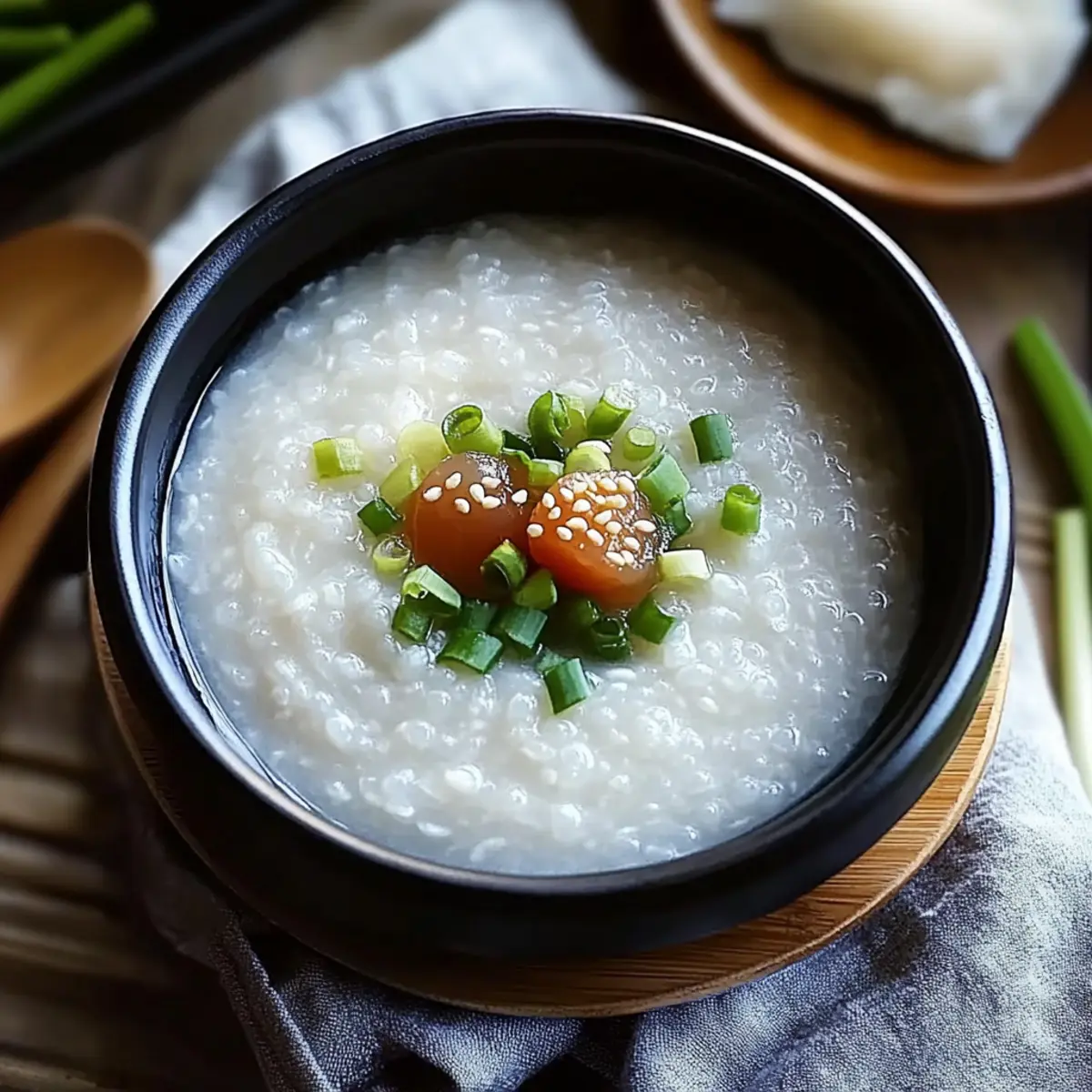
On a chilly evening, when the world outside feels stark and unwelcoming, I find solace in the simplicity of Japanese congee, or okayu. This creamy rice porridge wraps you in a comforting embrace, transforming a mundane meal into a nourishing ritual. Whether you’re seeking a quick, gluten-free solution for a busy weeknight or delicious comfort food that warms the soul, this okayu recipe provides endless opportunities for customization. You can easily transform this dish with a variety of toppings, from tangy umeboshi to a luscious poached egg, making it a true crowd-pleaser. So, let’s dive into the magic of creating your own bowl of healing goodness—how will you top yours?
What Makes Japanese Congee Special?
Comforting Warmth: Okayu offers a gentle hug in a bowl, making it the ultimate dish for chilly evenings.
Endless Customization: With diverse toppings like umeboshi or poached egg, you can personalize your bowl to match your cravings.
Health-Conscious Choice: It’s naturally gluten-free and low-calorie, perfect for those seeking a nutritious meal.
Quick & Easy: This recipe is simple enough for any home cook, even on the busiest days.
Satisfying Versatility: Enjoy it for breakfast, lunch, or dinner, proving that comfort food can be enjoyed anytime!
Japanese Congee Ingredients
For the Porridge
• Short Grain Japanese Rice – Essential for that creamy texture; it absorbs water well for a soothing porridge. Substitution: Look for “sushi rice” or “glutinous rice” for best results.
• Water – The primary cooking liquid; adjust for desired porridge thickness. Notes: More water yields a thinner porridge.
• Salt (Optional) – Enhances flavor; omit for plain okayu or to meet dietary preferences.
For Toppings
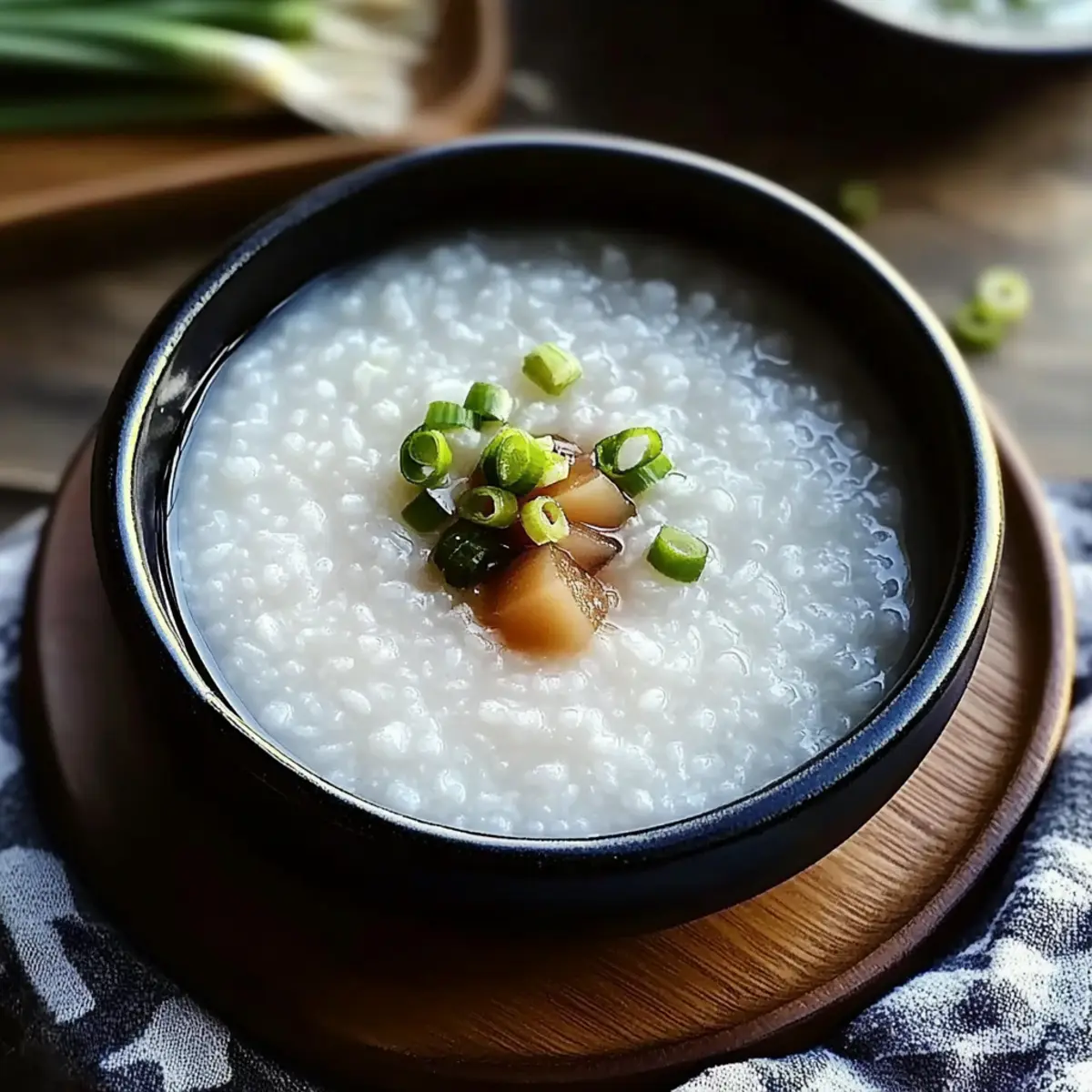
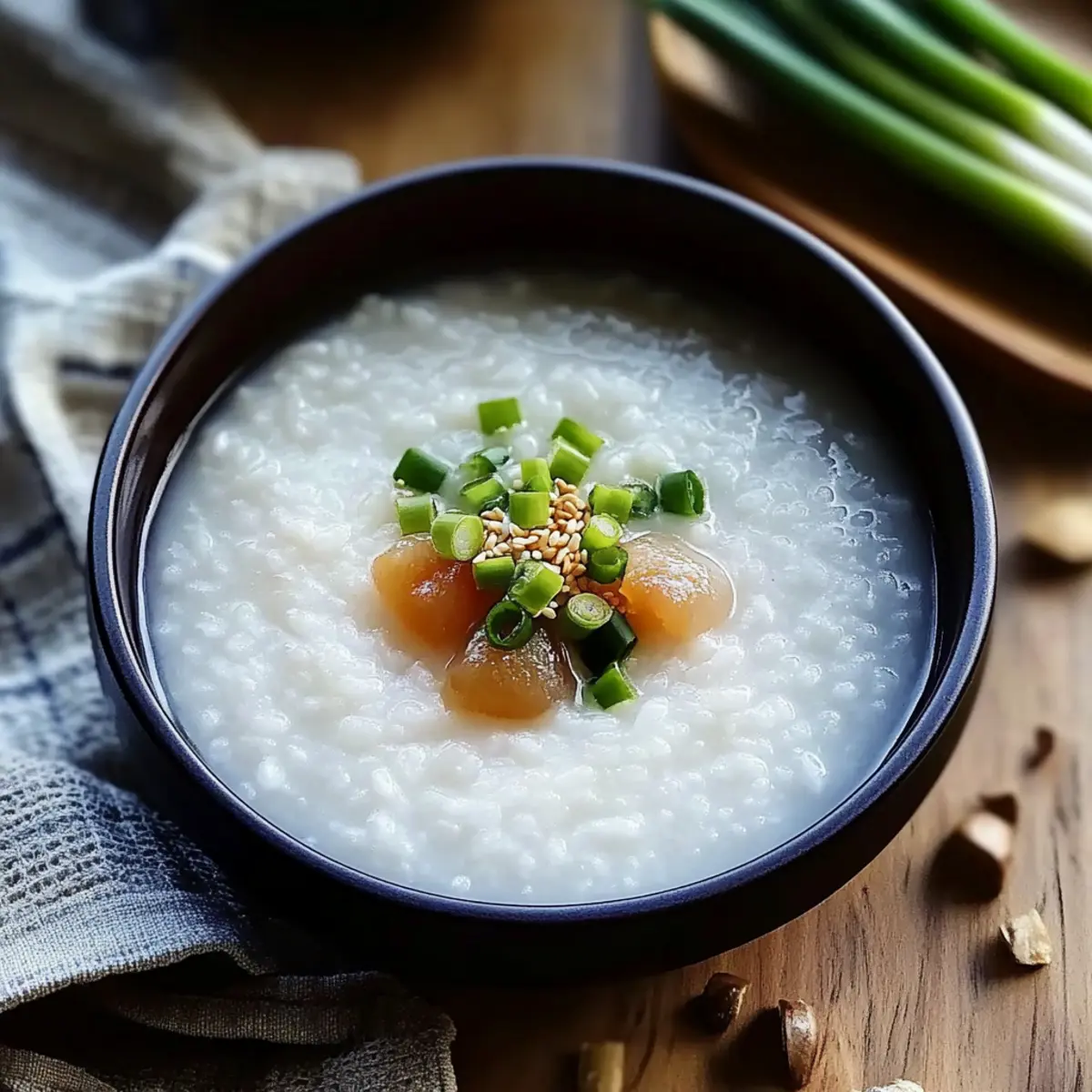
• Umeboshi (Japanese Pickled Plum) – Traditional topping that adds a tangy punch to counterbalance the porridge’s creaminess.
• Sesame Seeds – Toasted for added crunch and nutty flavor; elevate texture.
• Scallions – Freshly chopped to bring sharpness and color; provide flavor contrast.
• Nori (Seaweed) – Crisp sheets that add umami depth; offers a savory element.
• Poached Egg – For heartiness and richness; transforms okayu into a more substantial meal.
Feel free to explore the endless variations that make this Japanese congee a truly personalized dish!
Step‑by‑Step Instructions for Japanese Congee
Step 1: Rinse the Rice
Begin by rinsing 1 cup of short grain Japanese rice under cold running water in a fine mesh strainer. Gently swirl the rice with your hands until the water runs clear, which should take about 2-3 minutes. This step is essential for removing excess starch, ensuring your Japanese congee has the ideal creamy texture.
Step 2: Combine Ingredients
In a pot—preferably a donabe for even cooking—combine the rinsed rice with 4 cups of water. If desired, add a pinch of salt to enhance the flavor of your okayu. Stir gently to combine the ingredients, ensuring no clumps remain, which prepares a smooth base for your comforting rice porridge.
Step 3: Bring to Boil
Set the pot over medium heat and bring the rice and water mixture to a boil. Stir occasionally to prevent the rice from sticking to the bottom of the pot. This process may take about 5-7 minutes. Once boiling, you’ll notice bubbly activity; it’s time to lower the heat to ensure a gentle simmer for the next step.
Step 4: Simmer Gently
Reduce the heat to low, then cover the pot with a lid. Allow the mixture to simmer for 35-40 minutes, stirring occasionally. You’ll know the Japanese congee is ready when the rice becomes soft and slightly mushy, transforming into a creamy porridge that warms the soul on chilly evenings.
Step 5: Serve it Up
Once the okayu has reached the desired consistency, ladle it into warm bowls. Top your comforting Japanese congee with traditional umeboshi or your choice of toppings like toasted sesame seeds, freshly chopped scallions, or a poached egg for added richness. Enjoy the nourishing warmth as you savor each delightful bite.
Make Ahead Options
These Japanese Congee preparations are ideal for busy home cooks looking to save time during hectic weeks! You can prepare the rice and water mixture up to 24 hours in advance—just combine 1 cup of rinsed short grain rice with 4 cups of water and store it in the refrigerator. To maintain quality, cover the pot tightly to prevent the rice from drying out. When you’re ready to enjoy your okayu, simply bring the mixture to a boil and simmer gently for about 35-40 minutes, stirring occasionally. With this prep method, you’ll have a comforting bowl of Japanese congee ready to serve with your favorite toppings in no time!
Tips for the Best Japanese Congee
-
Rinse the Rice: Always rinse your rice until the water runs clear to remove excess starch; this is crucial for achieving that creamy Japanese congee texture.
-
Water Control: Adjust the water ratio based on your preference; more water leads to a thinner porridge, so experiment to find your ideal consistency.
-
Stir Occasionally: During simmering, stir the congee occasionally to prevent sticking; using a donabe or a heavy pot ensures even cooking.
-
Perfect Toppings: Get creative with toppings! Umeboshi and a poached egg are great, but don’t hesitate to try vegetables or herbs for a comforting twist.
-
Reheat with Care: When saving leftovers, add a splash of water to restore the creamy texture when reheating your Japanese congee.
Japanese Congee Variations & Substitutions
Feel free to explore these delightful twists and substitutions that will elevate your Japanese congee to new flavor heights!
- Dairy-Free: Swap a poached egg for sliced avocado to add creaminess and healthy fats.
- Gluten-Free: Use tamari in place of traditional soy sauce as a seasoning without sacrificing flavor.
- Spicy Kick: Stir in a touch of chili paste or sriracha for a delightful heat that complements the creamy porridge.
- Cheesy Delight: Add a sprinkle of grated parmesan or nutritional yeast for a savory, umami boost.
Add your unique touch by including herbs like fresh basil or mint—an aromatic contrast that brightens every bite.
- Crispy Texture: Top with fried shallots or crispy garlic for an irresistible crunch that enhances each spoonful.
- Nutty Flavor: Drizzle toasted sesame oil right before serving to add an alluring depth of flavor.
- Sweet Option: For a breakfast twist, layer on honey and fresh fruits like ripe bananas or berries to transform it into a soothing morning bowl.
These variations not only invigorate your congee experience but also cater to diverse palates. Enjoy the process of creating a getaway in a bowl with these customizations!
How to Store and Freeze Japanese Congee
Fridge: Store leftover okayu in an airtight container for up to 4 days. Keep it chilled and ready for a quick meal!
Freezer: Japanese congee can be frozen for up to 3 months. Portion it into freezer-safe containers, leaving space for expansion.
Reheating: When reheating, add a splash of water to help restore the creamy texture. Warm in a pot over low heat, stirring gently until heated through.
Make-Ahead Tip: Combine the rice and water mixture ahead of time and refrigerate it for up to 24 hours for a convenient meal prep option.
What to Serve with Comforting Japanese Congee?
Savoring a warm bowl of Japanese congee is a heartwarming experience, but pairing it with the right accompaniments can elevate your meal even further.
-
Grilled Fish: A light fillet, such as salmon or mackerel, adds protein and a smoky flavor, balancing the congee’s creamy texture beautifully.
-
Pickled Vegetables: Crunchy, tangy delights like pickled radishes or cucumbers bring a refreshing contrast that enhances each bowl. Their zesty bite lightens the comforting richness of the rice porridge.
-
Miso Soup: A simple miso soup enriched with tofu and seaweed offers a savory depth that pairs harmoniously with the mild flavors of okayu. A delightful way to incorporate more warmth into the meal.
-
Steamed Greens: Lightly seasoned bok choy or spinach delivers vibrant color and nutrients. Their freshness cuts through the porridge’s creaminess, creating a balanced bite.
-
Soft Boiled Eggs: Perfectly cooked eggs add a luscious creaminess when mixed into the okayu. With their rich yolks, they enhance the dish, making it even more satisfying.
-
Sake or Green Tea: A warm cup of sake or delicate green tea complements the subtle notes of the congee while adding an extra layer of relaxation to your dining experience.
-
Sesame Spinach Salad: A side salad of seasoned spinach with sesame oil and seeds will add a crunchy texture that pairs beautifully with the soft congee.
-
Fruity Dessert: End your meal on a sweet note with light desserts like mochi or fresh fruit, offering a delightful contrast to the flavors of okayu. Their sweetness leaves a pleasant finish.
Each of these pairings brings unique textures and flavors, turning your Japanese congee into a memorable meal experience!
Japanese Congee Recipe FAQs
What type of rice should I use for okayu?
The best choice for okayu is short grain Japanese rice, as it creates that signature creamy texture. If you can’t find it, you can substitute with sushi rice or glutinous rice, which also absorb water beautifully and yield a soothing porridge.
How should I store leftover okayu?
Absolutely! Store any leftover okayu in an airtight container in the refrigerator for up to 4 days. Just remember to keep it chilled so it’s ready for a quick meal. When reheating, add a splash of water to help bring back that creamy goodness.
Can I freeze Japanese congee?
Yes, indeed! You can freeze Japanese congee for up to 3 months. To do so, portion the okayu into freezer-safe containers, leaving some space for expansion as it freezes. When you’re ready to enjoy it, just thaw in the refrigerator overnight and reheat in a pot with a bit of water for the best texture.
What’s the best way to adjust the thickness of the porridge?
If you’d like a thinner or thicker okayu, simply alter the water ratio. For a thinner porridge, add more water (about an additional cup) during cooking. Gradually add the water until you reach your desired consistency. Don’t be shy about experimenting!
Are there any common issues I should be aware of?
One common issue is rice sticking to the pot, especially if you’re not stirring enough while it simmers. To avoid this, make sure to stir occasionally and consider using a donabe or a heavy-bottomed pot for even heat distribution. If you find your okayu too thick, just add a little water while reheating!
Can my pets eat Japanese congee?
While plain okayu (made with just rice and water) is generally safe for pets, it’s best to avoid adding salt or toppings like umeboshi, which may not be suitable for their diet. Always consult your veterinarian if you’re uncertain about introducing new foods to your pet’s meals.
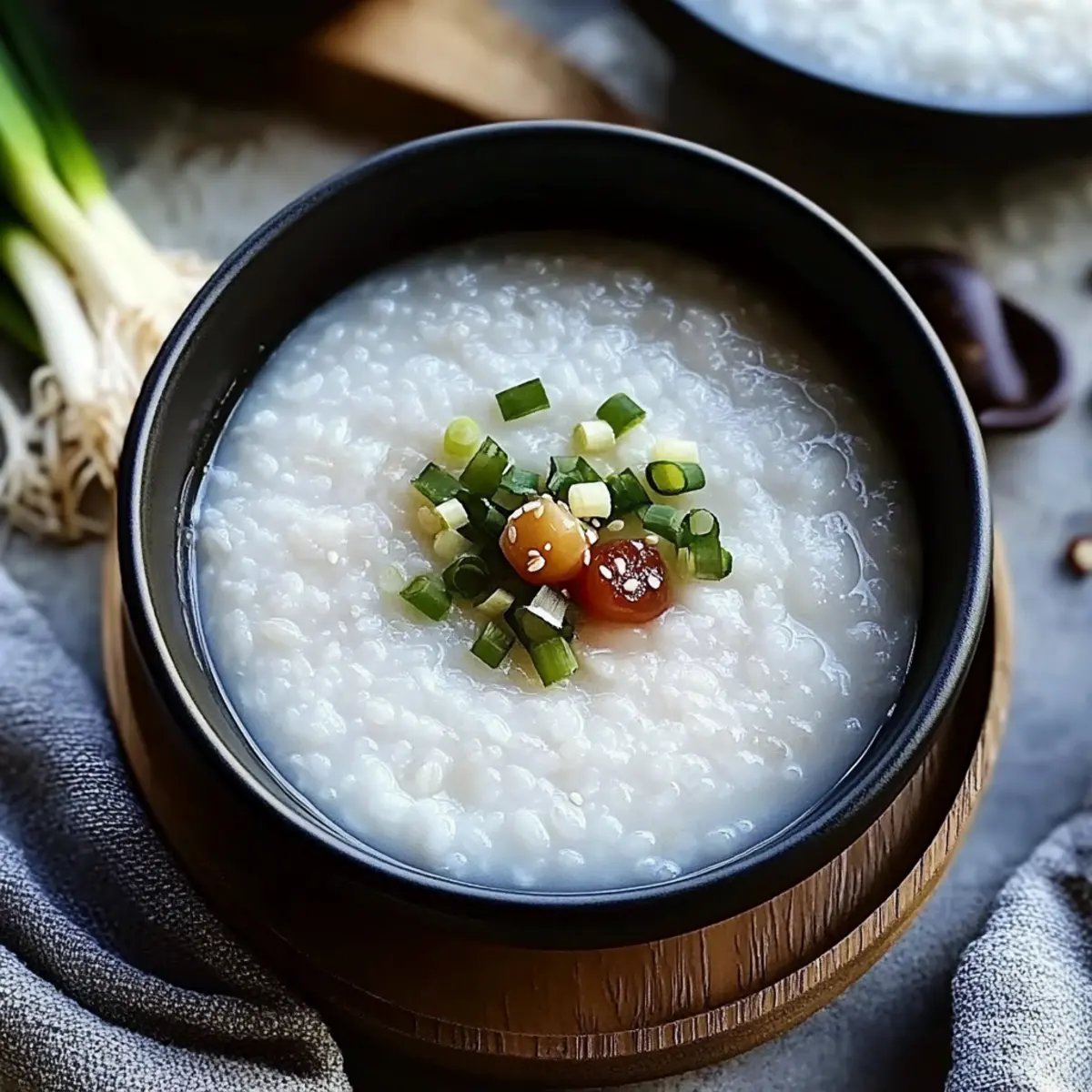
Comforting Japanese Congee: Your New Favorite Cozy Meal
Ingredients
Equipment
Method
- Rinse the rice under cold running water in a fine mesh strainer until the water runs clear, about 2-3 minutes.
- Combine the rinsed rice, 4 cups of water, and optional salt in a pot. Stir gently.
- Bring to a boil over medium heat, stirring occasionally to prevent sticking.
- Reduce heat to low, cover the pot, and simmer for 35-40 minutes, stirring occasionally.
- Ladle the okayu into bowls and top with umeboshi or your choice of toppings.