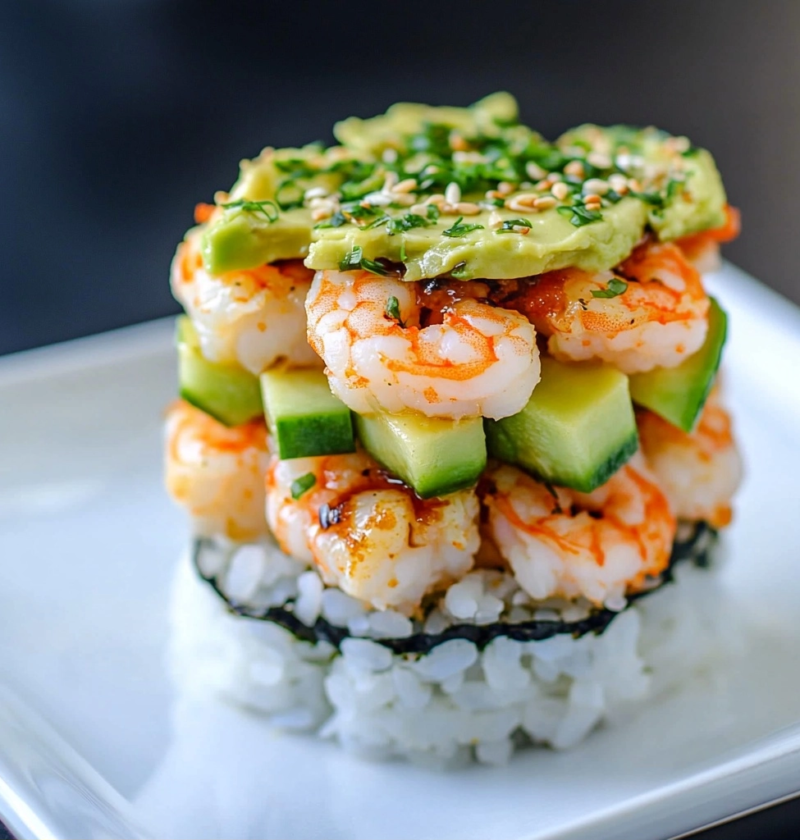
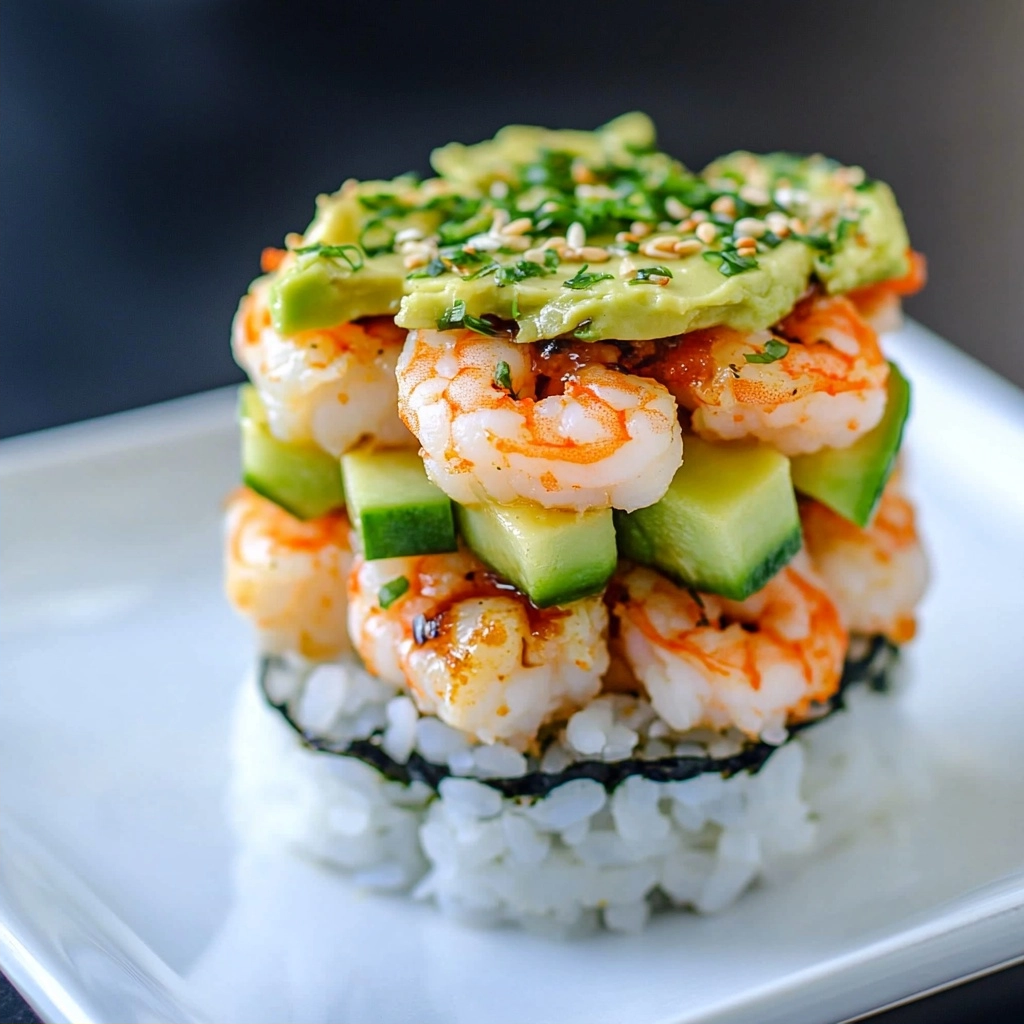
These shrimp sushi stacks present a creative twist on traditional sushi rolls that deliver an impressive presentation with minimal effort. Each bite combines seasoned rice with creamy avocado and zesty spicy shrimp for a flavor profile that satisfies both casual diners and seafood enthusiasts. This dish offers the comfort of home cooking paired with the sophistication of restaurant quality plating.
| Detail | Information |
|---|---|
| Prep Time | 30 minutes |
| Cook Time | 20 minutes |
| Total Time | 50 minutes |
| Servings | 4 |
| Difficulty | Easy |
| Cuisine | Japanese Inspired |
| Category | Main Course |
| Method | Assembly |
Why This Recipe Works
This recipe works because it eliminates the complexity of rolling traditional maki sheets while preserving the essential textures and flavors that define high-quality sushi dishes. Home cooks appreciate the structured approach, which allows for uniform layers that remain stable during serving and eating.
The combination of sticky short-grain rice with rich avocado creates a creamy contrast to the firm, protein-packed spicy shrimp. This balance ensures every forkful provides a satisfying mouthfeel that keeps diners coming back for seconds without feeling overwhelmed by too much filling.
Timing and assembly are managed through a step-by-step layering process that simplifies the cooking workflow significantly in the kitchen. Guests appreciate the visual appeal of the rings or molds, which turn a standard dinner into a celebration ready for any special occasion or family gathering.
The use of common pantry staples like rice vinegar and mayonnaise ensures that the overall cost remains low while delivering a premium dining experience at home.
Chef Tips for Perfect Results
Achieving uniform stacks requires careful attention to moisture control during each assembly step to maintain structural integrity.
- Cool the rice slightly: Ensure the cooked rice has cooled down before folding in the vinegar mixture, or it will become mushy and lose its stickiness needed for the mold.
- Squeeze avocado well: Pressing excess liquid from the mashed avocado prevents the stack from becoming soggy and collapsing when cut.
- Season rice properly: Use a gentle folding motion to incorporate the seasoning agents without crushing the individual grains of rice to keep them distinct.
- Choose sturdy shrimp: Use large boiled or steamed shrimp that hold their shape well under the pressure of the layered mold during the pressing process.
- Lubricate molds: Lightly spray the inside of the mold with cooking oil or wipe with a wet paper towel so the rice does not stick during removal.
- Press with force: Ensure you press down firmly on each layer to compact the rice and bind the ingredients together before inverting onto the serving plate.
- Chill before serving: Place the assembled stacks in the refrigerator for at least 15 minutes to help the layers set and firm up for easier slicing.
- Top with crisp garnish: Sprinkle furikake or sesame seeds immediately before serving to maintain their crunch and avoid them becoming soggy from the moisture below.
Common Mistakes to Avoid
Many first-time cooks struggle with maintaining the shape of these stacks if they rush the preparation steps or ignore key texture cues.
| Mistake | Why It Happens | How to Fix It |
|---|---|---|
| Rice falls apart | Rice was overcooked or under-seasoned | Measure water accurately and add seasoned vinegar while warm. |
| Mold sticks to rice | No oil or moisture barrier used | Apply cooking spray or wipe mold with a wet cloth before use. |
| Fillings slide out | Layers were not pressed tightly together | Use the back of a spoon to firmly compact each layer inside. |
| Avocado turns brown | Exposed to too much air | Cover tightly with plastic wrap and add extra lime juice. |
| Taste is too bland | Rice lacked seasoning | Degust the rice before assembling to check salt and vinegar levels. |
Variations and Substitutions
Modifying the ingredients allows this dish to be customized for different dietary needs or flavor preferences without sacrificing the core concept of the layered dish.
| Ingredient or Element | Substitution or Variation | Impact on Flavor or Texture |
|---|---|---|
| Shrimp | Canned tuna or cooked crab meat | Changes the flavor to oceanic and alters texture to flakier. |
| Mayonnaise | Greek yogurt or avocado puree | Reduces fat and calories while maintaining creaminess. |
| Rice | Quinoa or cauliflower rice | Increases protein or lowers carbohydrates significantly. |
| Furikake | Toastedsesame seeds or seaweed flakes | Maintains crunch and adds a salty umami kick to the top. |
| Lime Juice | Rice vinegar or lemon zest | Adjusts acidity while keeping the freshness required. |
| Sriracha | Cayenne pepper or chili flakes | Provides spice without adding extra liquid volume. |
| Cucumber | Jicama or radish slices | Keeps crunch but offers a different water content and flavor. |
| Assembling Mold | Ramekin or inverted glass | Requires a flatter plate to invert onto for clean release. |
Serving Suggestions and Pairings
Serving these stacks requires coordinating side dishes that complement the light and fresh profile of the main dish without overpowering it.
- Serve with a side of steamed edamame for added plant protein and color.
- Offer a crisp green tea salad to cleanse the palate between bites.
- Add a dollop of spicy ginger oil to enhance the overall umami flavor.
- Pair with miso soup as a traditional Japanese starter course.
- Include small cucumber slices with sesame seeds for extra texture.
- Provide a side of wasabi paste for those who want extra heat.
- Pair with chilled sakes or non-alcoholic green tea as a beverage.
- Offer a light citrus vinaigrette salad for acidity balance.
- Serve with pickled ginger to aid digestion and refresh the palate.
- Include a side of soba noodles for a more filling meal option.
- Top with microgreen herbs for an elegant finish.
- Pair with fruit skewers as a sweet contrast to the savory rice.
A complete meal experience is achieved by assembling a platter that includes the stacks alongside steamed vegetables and a clear soup to create a balanced and healthy dinner spread.
Make Ahead Options
The component elements of this dish can be prepared up to 24 hours in advance to reduce stress during meal service time. The seafood mixture and seasoned rice can be made the night before and kept refrigerated in airtight containers to preserve freshness and flavor.
It is important to keep the avocado separate until assembly time to prevent oxidation and ensure the best texture. Store the avocado with an extra layer of lime juice and plastic wrap in direct contact with the surface.
When ready to serve, simply press the components into the molds and garnish immediately. This strategy allows for efficient kitchen management during parties or busy weeknight dinners.
Reheating is generally not recommended for this dish as the temperature changes may soften the rice texture and affect the structural integrity.
Storage and Reheating
Proper storage is essential for maintaining the quality and safety of the prepared stacks throughout the week.
| Method | Duration | Instructions |
|---|---|---|
| Room Temperature | Up to 2 hours | Keep covered if serving during short windows to prevent drying. |
| Refrigerator | 2 to 3 days | Store assembled stacks in an airtight container to maintain shape. |
| Freezer | Not recommended | Texture of rice and avocado degrades significantly upon thawing. |
| Reheating | None | Refrigerate and serve cold or room temperature for best quality. |
| Make Ahead | 24 hours | Store components separately and assemble closer to serving time. |
Nutritional Information
Approximate values are based on one serving and may vary depending on exact ingredients and portion size.
| Nutrient | Amount per Serving |
|---|---|
| Calories | 350 |
| Protein | 18 grams |
| Fat | 12 grams |
| Saturated Fat | 2 grams |
| Carbohydrates | 45 grams |
| Fiber | 5 grams |
| Sugar | 2 grams |
| Sodium | 600 mg |
Frequently Asked Questions
Can I substitute the shrimp with fish?
Yes, you can substitute the shrimp with cooked crab, salmon, or cooked chicken. This changes the protein source but maintains the structure of the stack.
Ensure the alternative protein is diced and seasoned similarly to ensure consistent flavor throughout the dish. The cooking method remains the same regardless of the protein choice.
How do I know when the rice is ready?
The rice is ready when all the water is absorbed and the grains are tender to the bite. You should be able to crush a grain between your fingers without resistance.
If the rice still feels crunchy, allow it to steam for another five minutes before draining or checking again. Properly cooked rice will be slightly sticky but not mushy.
Why does my stack fall apart?
The most common reason for falling apart is insufficient rice stickiness or lack of compression during the layering process. Using the correct ratio of water and vinegar helps bind the grains together.
If using a mold, press down firmly on each layer to ensure they adhere to one another before inverting the final shape onto a plate.
Can I make the shrimp element ahead of time?
Yes, the spicy shrimp can be prepared up to 24 hours prior and kept sealed in the refrigerator. Storing the shrimp in a separate container helps prevent cross-contamination and preserves texture.
Combining the shrimp with mayo just before serving prevents separation and maintains the creamy consistency needed for the layer.
What is the best way to remove the mold?
Lift the mold straight up gently and slowly to allow the bottom of the rice to release from the surface cleanly. Tapping the side of the mold lightly can help dislodge any stuck rice grains.
If the rice sticks, run the mold under warm water for a few seconds to loosen the starch bonds before removal. Avoid forcing it if resistance is felt.
How should I store leftovers?
Store any leftover stacks in an airtight container in the refrigerator to maintain freshness and prevent drying. The rice may dry out slightly over time, so consume within 48 hours for best quality.
Avoid freezing as the texture of the rice and avocado changes significantly and becomes unpleasant to eat after thawing.
Conclusion
These shrimp sushi stacks provide a deliciously satisfying dinner option that brings the joy of Japanese flavors to your home kitchen with minimal hassle. The layer of seasoned rice, creamy avocado, and zesty shrimp creates a memorable dish that feels like a special treat without the long wait time of a restaurant. Embrace the convenience and visual presentation to enjoy a meal that is both light and substantial for your family tonight.
Shrimp Sushi Stacks: Ultimate Crunchy & Fresh Dinner Recipe
Ingredients
Method
- Rinse the sushi rice under cold water until the water runs clear. Cook the rice according to package instructions.
- In a small bowl, mix rice vinegar, sugar, and salt until the sugar dissolves. Once the rice is cooked, allow it to cool slightly, then gently fold in the vinegar mixture.
- In a pan, heat the olive oil over medium heat. Add the shrimp and cook until fully pink and cooked through, about 3-4 minutes. Squeeze fresh lemon juice over the shrimp for zesty flavor.
- In a separate bowl, mash the avocado. Press out excess moisture to avoid a soggy texture.
- Divide the seasoned sushi rice evenly among the molds or rice paper, pressing to form a compact base.
- Add a layer of mashed avocado, followed by spicy shrimp, wasabi (if using), and cucumber strips.
- Top with a small amount of additional sushi rice to cover the fillings, pressing gently to shape the stack.
- Chill in the refrigerator for 10-15 minutes before unmolding.
- Garnish with sesame seeds and serve with optional soy sauce or wasabi.
Nutrition
Notes
For a spicier twist, add a pinch of chili flakes to the shrimp mixture.
Use a small ring mold for a more elegant presentation.