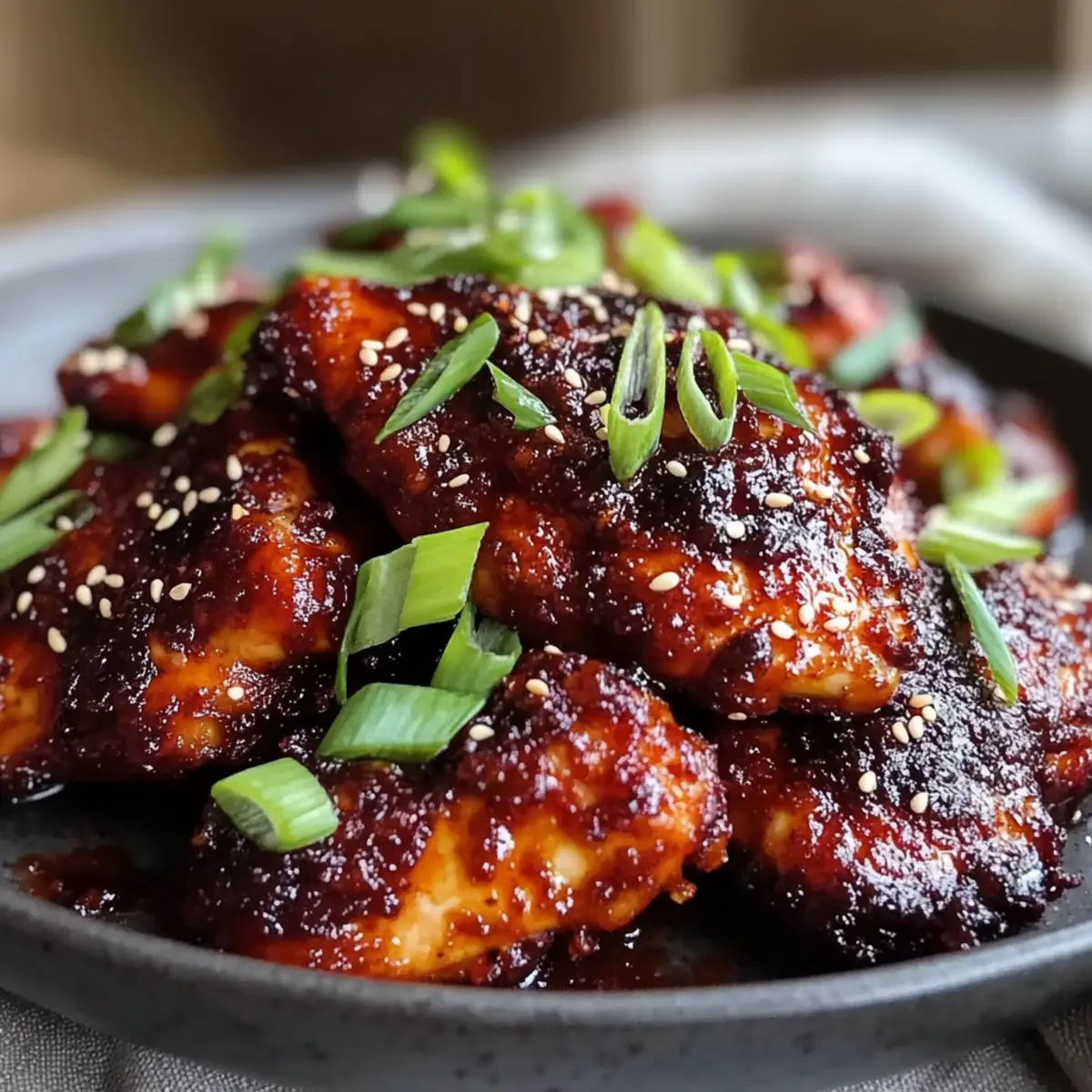
As the sizzling sound of chicken cooking fills the kitchen, an irresistible aroma wafts through the air, making my mouth water in anticipation. Today, I’m thrilled to share my recipe for Gochujang Chicken: Sweet and Spicy Korean Delight. This dish transforms humble chicken thighs into a flavor-packed weeknight meal that’s both quick to prepare and sure to impress your family or friends. The rich gochujang glaze creates a deliciously sticky finish while the combination of spicy, savory, and sweet flavors transports you straight to the heart of Korean cuisine. It’s the perfect remedy for anyone weary of fast food, offering a vibrant dinner option that’s fun to cook and delightful to savor. Ready to elevate your dinner game? Let’s dive into this culinary adventure together!
Why is Gochujang Chicken a Must-Try?
Explosive Flavor: The fusion of sweet and spicy from the gochujang glaze is unforgettable, leaving your taste buds dancing with joy.
Quick & Easy: This dish comes together in minimal time, making it perfect for busy weeknights when you still want something delicious.
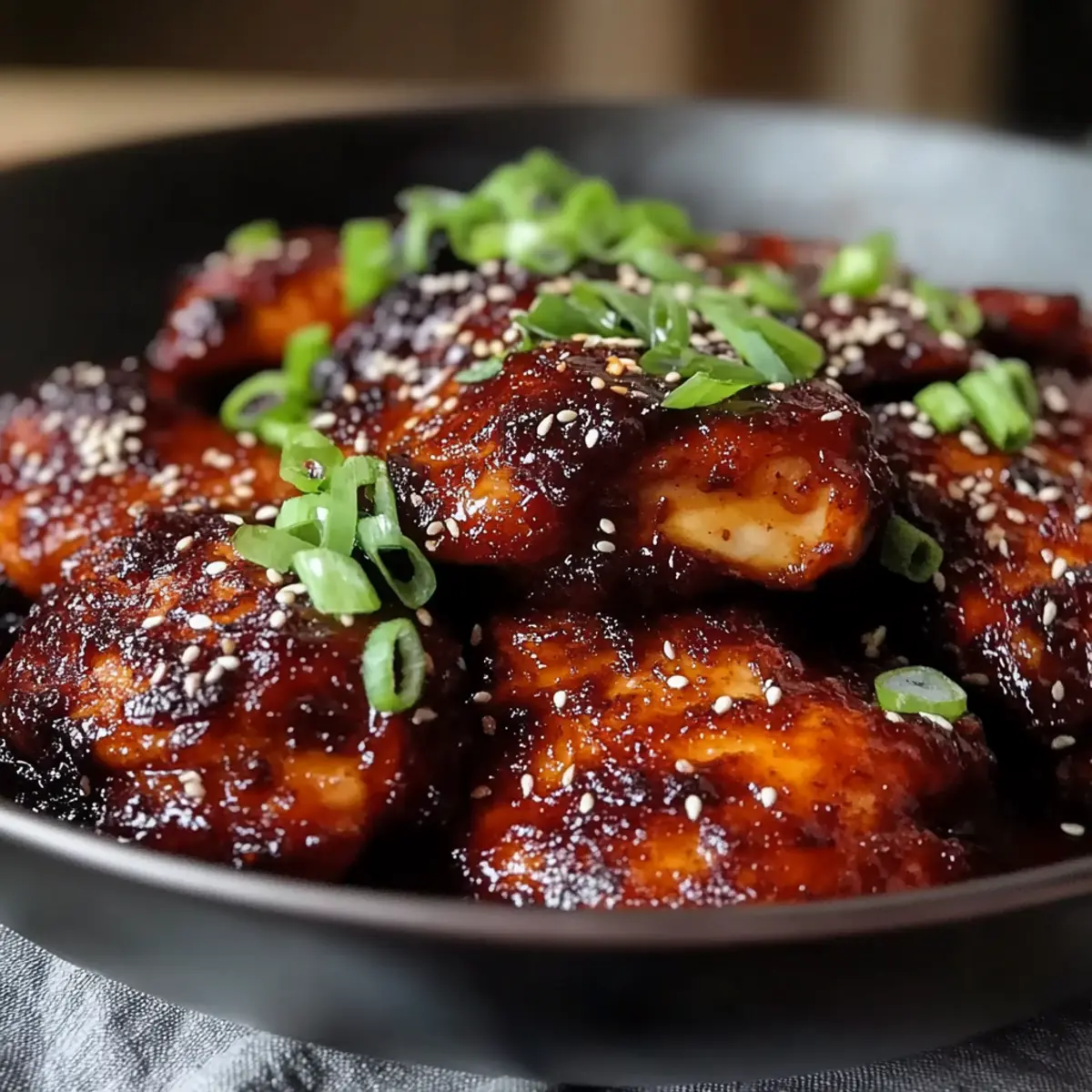
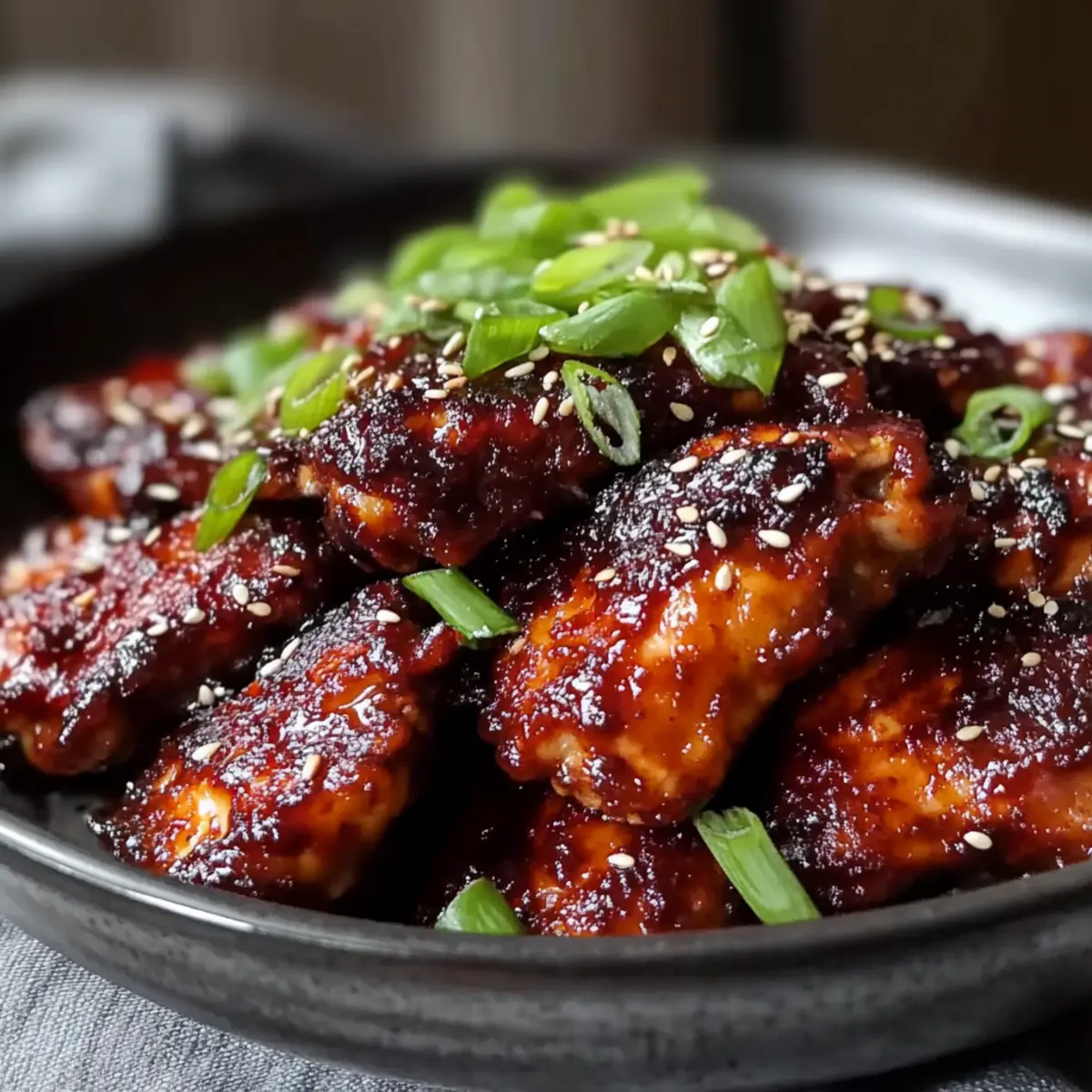
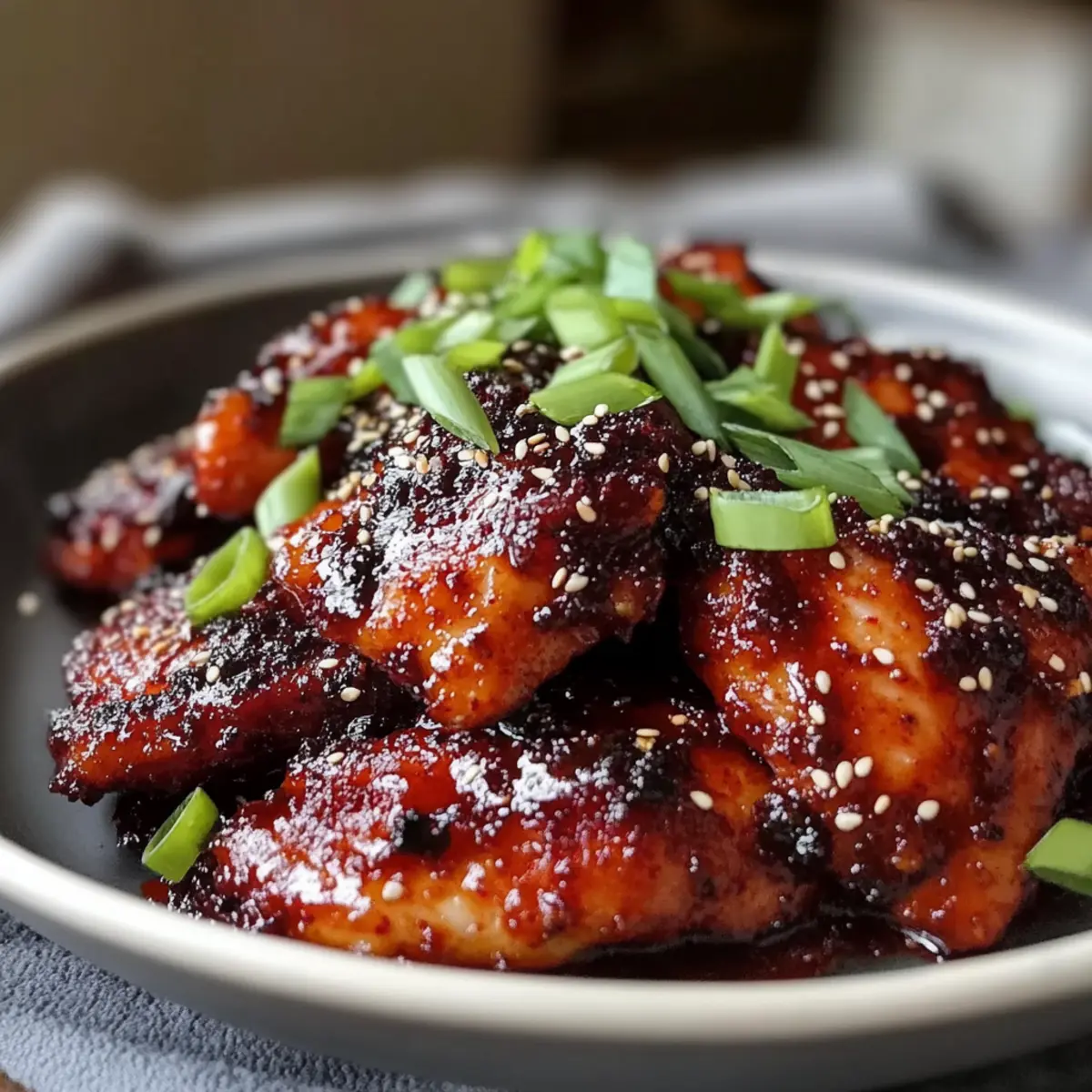
Impressive Presentation: Sticky caramelization not only enhances the flavor but also creates a stunning visual, sure to wow your dinner guests.
Versatile Options: While chicken thighs shine, try using salmon or pork to customize your experience. You can even explore alternatives like Jalapeno Popper Chicken for a fresh take!
Healthier Choice: Say goodbye to fast food and enjoy a homemade meal that’s both satisfying and wholesome. It’s time to indulge without the guilt!
Gochujang Chicken Ingredients
• Elevate your Gochujang Chicken with these essential ingredients!
For the Chicken
- Chicken Thighs – Boneless and skinless thighs provide richness and absorb the bold flavors beautifully.
For the Marinade
- Gochujang Paste – This spicy, savory paste is the star flavor; if unavailable, miso mixed with sriracha can stand in effectively.
- Soy Sauce – Adds depth; go for low-sodium to manage salt levels.
- Honey – A touch of sweetness to balance out the spice; swap with maple syrup or agave for a vegan option.
- Toasted Sesame Oil – Integral for that nutty finish; use regular sesame oil if needed.
- Garlic (minced) – Fresh garlic brings aromatic sharpness that elevates the dish.
- Fresh Ginger (grated) – This complements the dish’s heat beautifully; prefer fresh over dried.
- Rice Vinegar – Adds a bright acidity; apple cider vinegar works in a pinch.
- Neutral Oil – Necessary for greasing; think avocado or grapeseed oil for best results.
For Garnishing
- Green Onions – Provides a fresh crunch; can be swapped with chives or omitted if desired.
- Sesame Seeds – These not only add texture but also enhance visual appeal; optional but highly recommended for a classic touch.
Step‑by‑Step Instructions for Gochujang Chicken
Step 1: Make Marinade
In a medium bowl, combine ¼ cup gochujang paste, 2 tablespoons soy sauce, 2 tablespoons honey, 1 tablespoon toasted sesame oil, 3 minced garlic cloves, 1 tablespoon grated fresh ginger, and 1 tablespoon rice vinegar. Whisk these ingredients together until smooth and well blended, adjusting the flavors to your liking. This rich marinade is key to achieving the sweet and spicy profile of your Gochujang Chicken.
Step 2: Marinate Chicken
Pat 1.5 pounds of boneless, skinless chicken thighs dry with paper towels to ensure they sear properly. Place the chicken in a large bowl or a resealable plastic bag, pouring the marinade over the top. Make sure each piece is thoroughly coated, then cover or seal and refrigerate for at least 30 minutes, allowing the flavors to penetrate the meat. For even better taste, marinate for up to 4 hours.
Step 3: Prepare Cooking Method
Preheat your oven’s broiler or grill to medium-high heat (about 400°F). While it’s heating, prepare a wire rack placed in a baking sheet or grease grill grates with a neutral oil like avocado or grapeseed. This setup helps your Gochujang Chicken cook evenly while allowing excess marinade to drip away, resulting in a succulent texture.
Step 4: Cook Chicken
Remove the marinated chicken thighs from the refrigerator. Place them on the prepared wire rack or grill, ensuring they are spaced apart for even cooking. Cook the chicken for 6-7 minutes until the first side is browned and slightly charred. Flip the chicken and continue cooking for another 5-6 minutes. Brush with reserved marinade during the last couple of minutes, cooking until the internal temperature reaches 165°F (74°C) and the glaze is beautifully sticky.
Step 5: Rest and Serve
Once the Gochujang Chicken is cooked through, remove it from the heat and let it rest for about 5 minutes. This resting period allows the juices to redistribute, ensuring juicy bites. For an extra touch, you can boil any leftover marinade for a quick sauce. Slice the chicken, garnish with thinly sliced green onions and a sprinkle of sesame seeds, and serve with steamed rice or your favorite sides.
Storage Tips for Gochujang Chicken
Fridge: Store leftover Gochujang Chicken in an airtight container for up to 3 days. Ensure the chicken has cooled before sealing to maintain freshness.
Freezer: For longer storage, freeze the chicken in a sealed freezer bag or container for up to 2 months. Lay flat for quicker thawing.
Reheating: When reheating, do so gently in the microwave or on the stovetop with a splash of water, covering to maintain moisture. This keeps the chicken juicy and flavorful.
Marinating Ahead: If you want to prep ahead, marinate the chicken for up to 24 hours in the fridge before cooking for a deeper flavor experience.
Expert Tips for Gochujang Chicken
-
Pat Dry: Always pat chicken thighs dry before marinating. This step ensures a proper sear, which leads to a beautifully caramelized exterior.
-
Heat Adjustments: Monitor the amount of gochujang paste you use to adjust the heat level. Adding less will create a milder dish, perfect for family members with sensitive palates.
-
Fresh Ingredients: Using fresh garlic and ginger will greatly enhance the flavor profile of your Gochujang Chicken. Dried alternatives are convenient but won’t pack the same punch.
-
Rest Period: Allowing the chicken to rest after cooking is crucial; it ensures that every bite remains juicy and tender, avoiding dryness.
-
Leftover Marinade: Consider boiling any remaining marinade to serve as a sauce. Just make sure to cook it thoroughly for safety while adding an extra layer of deliciousness to your dish.
Gochujang Chicken Variations & Substitutions
Feel free to explore these exciting twists to suit your taste and dietary preferences!
-
Dairy-Free: Swap traditional ingredients like honey for maple syrup or agave to make this dish completely dairy-free without losing sweetness.
-
Vegetarian: Use firm tofu instead of chicken for a plant-based alternative. Marinate and cook just as you would the chicken for a satisfying meal.
-
Salmon Delight: Instead of chicken, marinate salmon fillets in the gochujang glaze. Cook briefly to keep it tender and flaky, resulting in a fabulous fish dish.
-
Pork Option: Use pork chops or tenderloin with the same marinade for a deliciously rich twist that offers a new profile to savor.
-
Heat Adjustments: Modify the spice level by reducing the amount of gochujang or incorporating milder chili sauces for a kid-friendly taste.
-
Spring Veggie Boost: Toss in seasonal veggies like bell peppers and snap peas during cooking for a pop of color and nutrients.
-
Sticky Rice: Serve alongside sticky rice or make a rice bowl. This not only complements the glaze but provides an authentic Korean touch.
-
Explore with Spices: Experiment with spices like cumin or coriander in your marinade for an unexpected flavor journey; it’ll surprise and delight your palate!
With these variations, you can tailor Gochujang Chicken to your liking, making it an ever-adaptable meal option perfect for any occasion! You might also enjoy adding some personality to your plate with Orange Cauliflower Chicken or try the spicy kick of Hot Honey Chicken. Happy cooking!
What to Serve with Gochujang Chicken
Elevate your dinner experience by transforming Gochujang Chicken into a well-rounded meal that delights every sense!
-
Steamed Rice: The fluffy texture of plain steamed rice absorbs the rich, sticky glaze, making each bite a flavor-packed delight.
-
Kimchi: This classic Korean side dish adds a crunchy, tangy contrast to the sweet and spicy chicken, enhancing the meal’s authenticity.
-
Sautéed Vegetables: Colorful veggies like bell peppers and snap peas bring freshness and a vibrant crunch, balancing the dish’s flavors beautifully.
-
Spicy Cucumber Salad: Crisp cucumbers dressed in vinegar and sesame oil provide a refreshing, cooling element that complements the heat of the chicken while adding texture.
-
Sesame Noodles: These rich, oily noodles dressed with soy sauce and sesame bring a satisfying chew and nutty flavor that pairs perfectly with the glaze.
-
Korean Potato Salad: A delightful twist on traditional potato salad, this version combines creaminess with a hint of sweetness, contrasting beautifully with the spicy chicken.
-
Beer or Soju: For a drink pairing, opt for a light lager or traditional soju. Their crispness cuts through the richness, creating a harmonious dining experience.
-
Mochi Ice Cream: End your meal on a sweet note with a bite of chewy mochi ice cream, providing a delightful contrast to the spiciness of the chicken.
Make Ahead Options
These Gochujang Chicken thighs are perfect for meal prep enthusiasts! You can marinate the chicken in the rich gochujang mixture up to 24 hours in advance, allowing the flavors to deepen and mingle beautifully. Simply pat the chicken dry, coat it in the marinade, and refrigerate in an airtight container. For optimal taste and texture, cook the marinated chicken fresh right before serving; this ensures the glaze remains sticky and caramelized. If you’ve prepared any leftover marinade, feel free to boil it down for a delicious sauce. With this make-ahead approach, busy weeknights will never be the same, treating your family to an easy, homemade flavor explosion!
Gochujang Chicken Recipe FAQs
What should I look for when selecting chicken thighs?
When selecting chicken thighs, look for boneless, skinless thighs that are plump and have a fresh, pink color without any dark spots. The skin should feel moist but not slimy. If you have the choice, go for thighs that are sourced from local farms for better flavor and quality.
How should I store leftover Gochujang Chicken?
Store any leftover Gochujang Chicken in an airtight container in the refrigerator for up to 3 days. Ensure the chicken has cooled completely before sealing the container to help maintain its moisture and prevent sogginess.
Can I freeze Gochujang Chicken?
Absolutely! To freeze Gochujang Chicken, transfer it into a freezer-safe container or a zip-top bag, making sure to remove excess air. It can be frozen for up to 2 months. For quicker thawing, lay the bag flat in the freezer. When ready to cook, thaw overnight in the fridge before reheating.
What if the chicken is dry after cooking?
If your Gochujang Chicken turns out dry, it might be due to overcooking or not allowing it to rest. For juicier results next time, ensure you use a meat thermometer and remove the chicken from heat once it reaches an internal temperature of 165°F (74°C). Let it rest for at least 5 minutes before slicing to retain moisture.
Are there any dietary considerations for Gochujang Chicken?
Yes, Gochujang contains fermented ingredients, which may not be suitable for people with certain allergies or dietary restrictions. If you’re vegan, substitute honey with maple syrup or agave nectar. Always read labels on ingredients like soy sauce for potential allergens, and choose low-sodium options if sodium intake is a concern.
How can I adjust the spiciness of Gochujang Chicken?
To adjust the spiciness of your Gochujang Chicken, you can vary the amount of gochujang paste used in the marinade. If you want a milder flavor, add less gochujang or mix it with some honey to alleviate the heat. You can also add more sweet ingredients, like honey or syrup, to balance out the spice.
Gochujang Chicken: Sweet and Spicy Flavor Explosion
Ingredients
Equipment
Method
- In a medium bowl, combine gochujang paste, soy sauce, honey, toasted sesame oil, minced garlic, grated fresh ginger, and rice vinegar. Whisk until smooth.
- Pat chicken thighs dry and place them in a large bowl. Pour marinade over the chicken, ensuring it's well coated. Seal and refrigerate for at least 30 minutes.
- Preheat your oven's broiler or grill to medium-high heat. Prepare a wire rack in a baking sheet or grease grill grates with neutral oil.
- Remove marinated chicken from the refrigerator. Cook on the prepared wire rack or grill for 6-7 minutes. Flip and continue cooking for another 5-6 minutes until cooked through.
- Let the chicken rest for about 5 minutes before slicing. Garnish with green onions and sesame seeds, and serve with rice or sides.