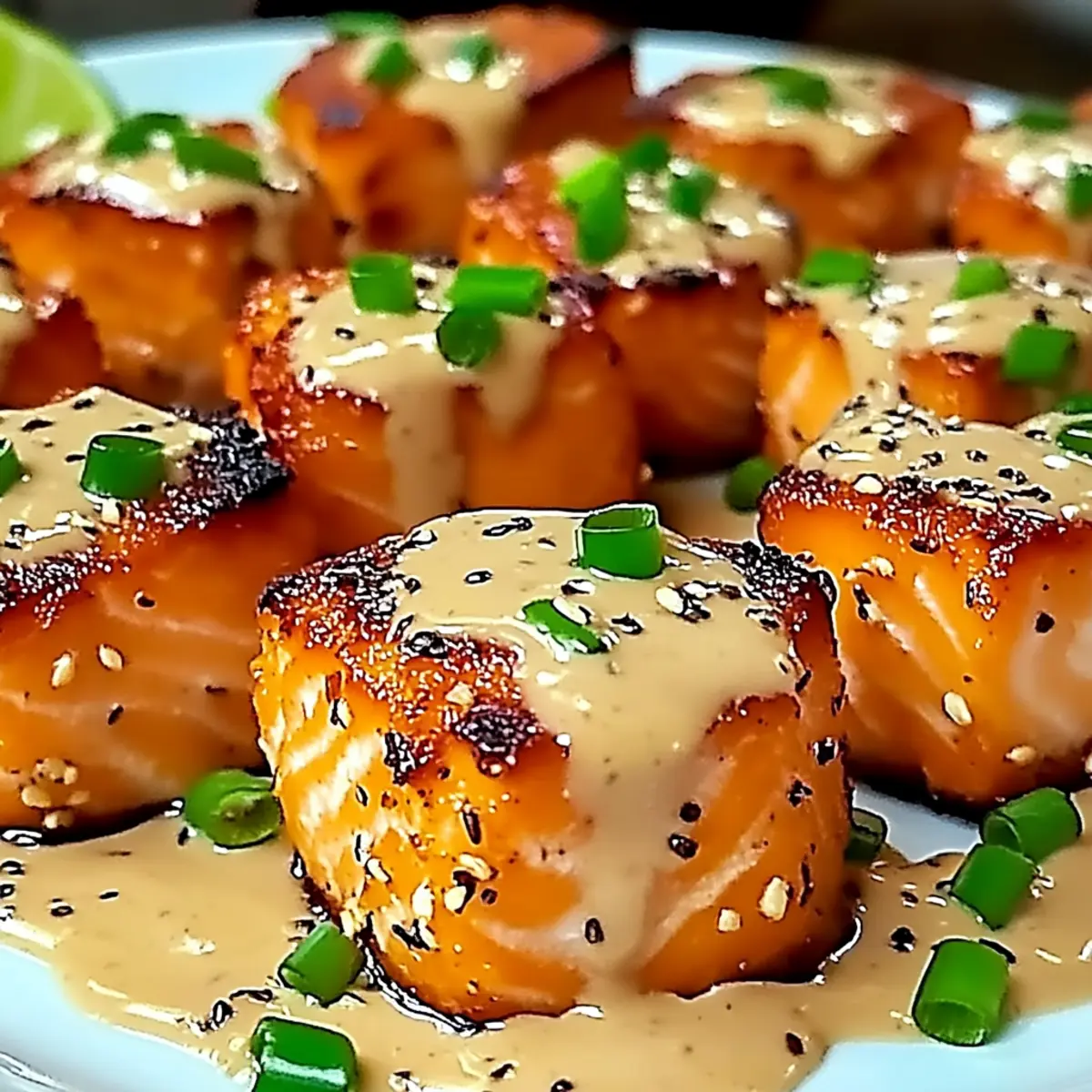
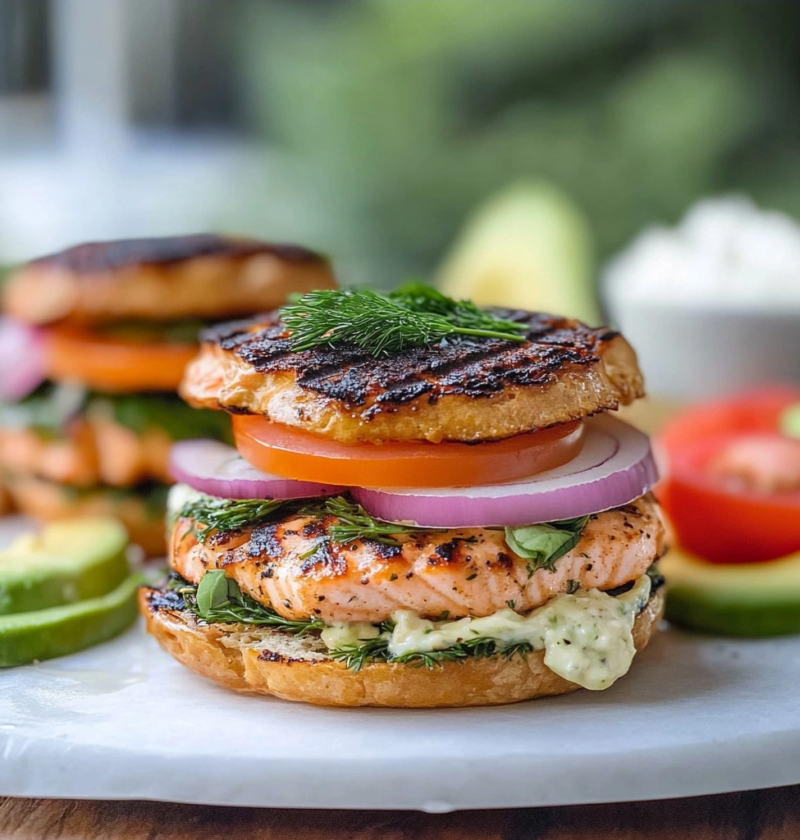
Grilled salmon burgers combine flaky fish with savory flavors for a fresh meal. These patties offer a juicy texture and mild taste suitable for family dinners. You will find fresh herbs and zesty lemons enhance the natural richness of the Atlantic salmon. Enjoy this seafood favorite with a quick sauce on soft buns or lettuce wraps. This dish brings the smoky charm of summer to your backyard grill without heavy grease.
| Detail | Information |
|---|---|
| Prep Time | 15 minutes |
| Cook Time | 8 minutes |
| Total Time | 23 minutes |
| Servings | 4 people |
| Difficulty | Easy |
| Cuisine | American |
| Category | Main Course |
| Method | Grilling |
Why This Recipe Works
This grilled salmon burger recipe succeeds because it balances moisture with structural integrity perfectly. Using an almond meal binder creates a gluten-free hold that prevents the patties from falling apart. The Dijon mustard and garlic add a savory depth that complements the natural sweetness of the fish. Fresh dill and lemon zest bring a bright floral note typical of coastal meals.
I have tested many variations of seafood burgers to find this specific ratio of salmon to binder. It ensures the patty stays juicy without becoming mushy when flipped on hot grates. The cooking time is short, preserving the delicate texture of the salmon filet chunks. You can achieve a nice sear on the outside while keeping the interior tender and warm.
The homemade lemon garlic aioli adds a creamy richness that standard mayonnaise might lack. It ties all the flavors together without overwhelming the delicate fish profile. Preparing the sauce in advance allows the flavors to meld before you serve the meal. This combination makes a reliable dinner option for warm evening nights or backyard cookouts.
Chef Tips for Perfect Results
Achieve the best outcome by controlling the heat intensity and avoiding over-processing the mixture.
- Coarse Grind is Key: Pulse the salmon only until coarsely ground so chunks remain for texture. Pureeing the fish too much creates a paste that cooks unevenly and loses its flaky nature. You want bite-sized pieces of fish within the patty structure.
- Dry the Salmon Thoroughly: Pat the salmon cubes with paper towels to remove excess moisture before processing. If the fish is too wet, the almond meal will absorb water and create a soggy patty. Drying ensures the binders work correctly during the cooking phase.
- Keep Ingredients Cold: Chill the salmon and mixture briefly before forming patties. Cold salmon holds together better when it hits the hot grill grates. This prevents the fats from melting out too quickly and causing flare-ups.
- Don’t Skip the Zest: Include fresh lemon zest in the mixture rather than just juice. The oils in the rind provide a powerful aromatic punch that heat releases slowly. This adds a layer of brightness to the savory base ingredients.
- Oil the Grates Generously: Clean the grill grates and oil them well before placing the fish on top. Salmon is naturally sticky and can tear easily on a dry surface. A well-oiled grill ensures you get a clean release. It also prevents the protein from sticking to the metal bars.
- Flip Gently: Turn the burgers only once using a wide spatula to support the full surface area. Rushing the flip or flipping multiple times disrupts the binding agents inside. One solid turn creates a crispy exterior on both sides.
- Check Temperature Carefully: Use a meat thermometer to reach 130 degrees Fahrenheit before removing from heat. Salmon continues to cook slightly after resting due to residual heat. Removing it at the target prevents dry and overcooked results.
- Toast the Buns: Lightly toast burger buns in a dry pan or on the grill briefly. This adds crunch and prevents the bun from getting soggy from the aioli. A sturdy base supports the heavier salmon patty well.
Common Mistakes to Avoid
Home cooks often encounter specific issues when preparing seafood patties that lead to dry or crumbling results.
| Mistake | Why It Happens | How to Fix It |
|---|---|---|
| Patties falling apart | Mixture was over-processed or not chilled enough | Process briefly and let the patties rest in the fridge for 30 minutes. |
| Patties sticking to grill | Grate was dirty or lacked oil | Clean the grill grates thoroughly before cooking. |
| Dry and tough texture | Salmon was overcooked on high heat | Monitor internal temperature closely and remove at 130F. |
| Lack of flavor | Insufficient seasoning or acidic elements | Add more lemon zest or Dijon mustard to boost taste. |
| Burnt exterior | Grill temperature was too high | Adjust to medium-high heat at 375 to 400F degrees. |
Variations and Substitutions
You can easily adapt the core ingredients to suit dietary needs or personal preferences.
| Ingredient or Element | Substitution or Variation | Impact on Flavor or Texture |
|---|---|---|
| Almond Meal | Use gluten-free breadcrumbs or crushed crackers | Maintains structure with a slightly softer texture. |
| Dijon Mustard | Use yellow mustard or spicy brown mustard | Changes the heat level and tanginess of the profile. |
| Fresh Dill | Substitute with dried dill or fresh parsley | Uses a milder or greener earthy herb taste. |
| Mayonnaise | Use Greek yogurt or tahini for a twist | Reduces fat and adds protein or nutty flavor. |
| Burger Buns | Serve on lettuce leaves or gluten-free rolls | Reduces carbohydrates or adds a fresh crunch. |
| Shallots | Use finely chopped red onion or green onions | Increases sharpness and adds more bite to the mix. |
| Salmon Type | Use cooked leftover salmon | Saves time but requires breaking up gently. |
Serving Suggestions
Pair these burgers with sides that complement the rich and buttery profile of the fish without overpowering it. The goal is to balance the meal with crisp vegetables and refreshing acids.
- Classic potato wedges tossed in rosemary salt provide a comforting starch base.
- A bright arugula salad with lemon vinaigrette adds necessary acidity and crunch.
- Grilled asparagus spears or zucchini rounds bring more vegetables to the plate.
- Coleslaw made with vinegar instead of mayo keeps the meal light and tangy.
- Roasted grape tomatoes drizzled with olive oil offer a burst of sweet juice.
- Mashed sweet potatoes give a soft contrasting texture to the salmon.
- Corn on the cob buttered lightly rounds out the barbecue style offering.
- Chips made from jicama or plantains offer a healthy alternative to fries.
- Cucumber slices with dill yogurt provide a cooling side element.
- Pickled red onions add a vibrant purple color and sharp flavor.
- Iced tea with fresh mint works perfectly as a non-alcoholic beverage option.
- A light fruit salad with berries can finish the meal on a sweet note.
For a complete meal, combine the salmon burger with a simple green salad and garlic bread to share. This combination offers a mix of textures from crisp salads to soft buns. Serve immediately while the fish is still warm and the sauce is fresh. This presentation works well for casual weeknight suppers or hosting guests.
Make Ahead Options
You can prepare components of this recipe up to 24 hours in advance without compromising quality. Mixing the burger mixture and forming the patties can be done the night before cooking.
Cover the formed patties tightly with plastic wrap and store them in the refrigerator. This helps the flavors to develop and the structure to firm up. When you are ready to cook, simply take them out about 15 minutes before grilling to lose the chill. You can also prepare the lemon garlic aioli the day before to enhance the flavor intensity.
Avoid cooking the patties ahead of time because reheating can dry out the delicate fish texture. Raw patties freeze well if you separate them with parchment paper. They maintain quality for up to one month if frozen immediately after shaping. Thaw overnight in the refrigerator before grilling for best results.
Storage and Reheating
Proper storage is essential to maintain the safety and freshness of the cooked salmon patties.
| Method | Duration | Instructions |
|---|---|---|
| Room Temperature | Up to 2 hours | Leave patties on a rack in a cool place. |
| Refrigerator | 3 to 4 days | Store in airtight containers to prevent drying. |
| Freezer | Up to 1 month | Wrap tightly in foil or freezer bags. |
| Reheating | 300 degrees Fahrenheit | Warm gently in oven to prevent overcooking. |
| Make Ahead | 24 hours | Form patties and refrigerate before cooking. |
Nutritional Information
Approximate values are based on one serving and may vary depending on exact ingredients and portion size.
| Nutrient | Amount per Serving |
|---|---|
| Calories | 320 |
| Protein | 25 grams |
| Fat | 22 grams |
| Saturated Fat | 3 grams |
| Carbohydrates | 6 grams |
| Fiber | 1 gram |
| Sugar | 2 grams |
| Sodium | 450 milligrams |
Frequently Asked Questions
Can I substitute the salmon for another type of fish?
While you can use trout or tuna, the texture and fat content vary significantly. Salmon provides the ideal level of oiliness to create moist burgers without crumbling. Other white fish may require more binder to hold together effectively.
How do I know when the salmon burgers are fully cooked?
The burgers are done when the internal temperature reaches about 130 degrees Fahrenheit. The exterior should be browned and the center should feel firm to the touch. Fish flakes easily when tested with a fork at this temperature.
Why did my salmon burger stick to the grill grates?
Sticking often occurs because the grill was not clean or not hot enough when the fish was added. Ensure your grates are cleaned and oiled thoroughly before placing the patties down. High heat creates a crust that releases naturally.
Can I prepare the patties a day in advance?
Yes, you can mix and form the patties up to 24 hours ahead. Keep them refrigerated in an airtight container or wrapped tightly on a tray. This allows the seasonings to penetrate the fish meat deeply.
What is the best way to toast the bun?
Toast the buns in a dry skillet or directly on the grill grates for one minute per side. This prevents the bun from becoming soggy once you add the aioli and toppings. A golden brown crust provides the best structural support.
How long do leftovers stay fresh in the fridge?
Cooked salmon burgers remain safe to eat for three to four days if stored correctly. Always keep them in a clean, sealed container to prevent cross-contamination. If they develop an off-odor, discard them immediately.
Conclusion
This Grilled Salmon Burgers recipe delivers a fresh and healthy twist to traditional burgers. The combination of flaky fish, almond meal, and zesty aioli creates a satisfying meal for any season. You can enjoy the smoky flavor of the grill while getting your omega-3s. Make it for your next gathering to impress your family with delicious, nutritious food.
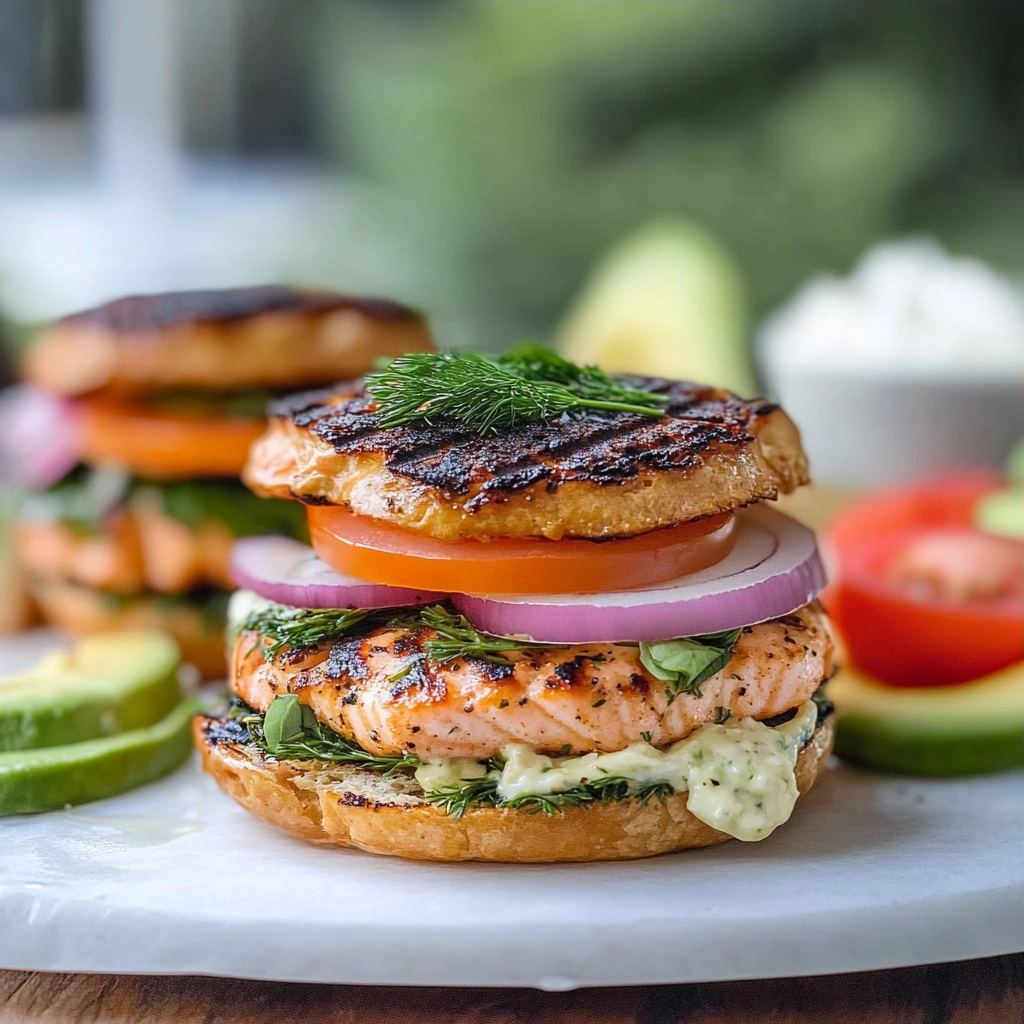
Grilled Salmon Burgers with Lemon Garlic Aioli
Ingredients
Method
- Preheat grill to medium-high heat (375°F/190°C)
- Pat salmon cubes dry with paper towels
- In a food processor, pulse salmon until coarsely ground (2-3 short pulses)
- In a bowl, mix ground salmon with almond meal, Dijon, garlic, dill, lemon zest, salt, and pepper
- Form mixture into 4 even patties
- Grill for 4 minutes per side until seared and warm
- Meanwhile, mix aioli ingredients in a small bowl
- Serve patties on buns or wraps with aioli
Nutrition
Notes
Use lemon slices on the grill to impart flavor without oil
For extra crispiness, chill patties in fridge for 30 minutes before grilling
Substitute almond meal with panko breadcrumbs for a non-gluten option