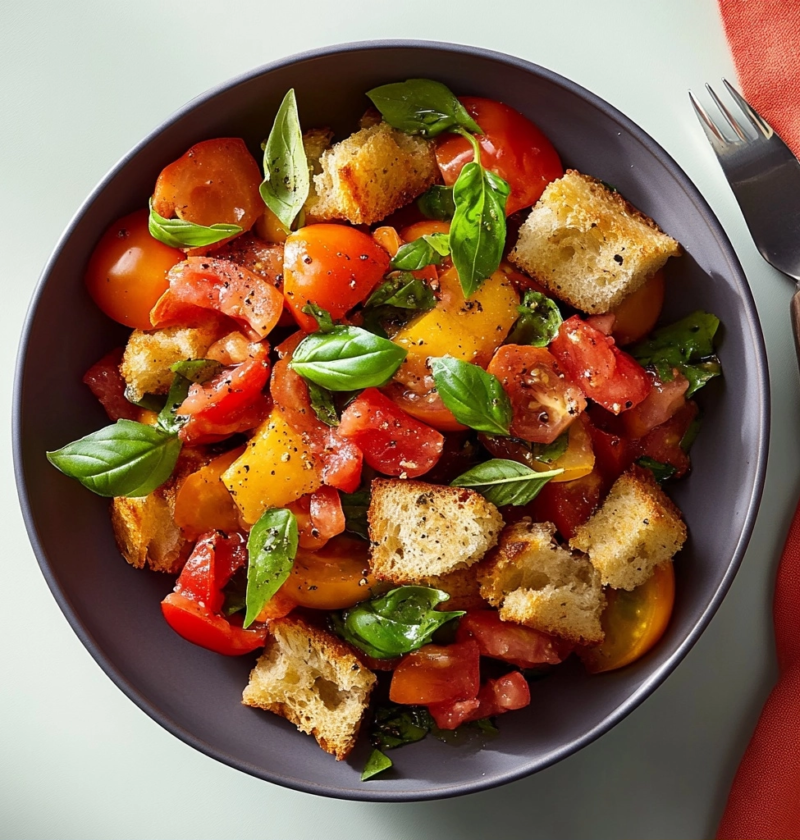
Panzanella salad is a refreshing Tuscan dish that transforms stale bread, ripe tomatoes, and fresh herbs into a vibrant, flavor-packed meal. This traditional Italian recipe relies on the magic of the Mediterranean to create a dish that is simultaneously hearty and incredibly light. Unlike standard leafy green salads, the Panzanella uses bread as the primary ingredient, absorbing the juices of the tomatoes and the tang of the vinaigrette to create a satisfying texture profile that feels much more substantial than its ingredient list suggests.
| Detail | Information |
|---|---|
| Prep Time | 20 minutes |
| Cook Time | 15 minutes |
| Total Time | 35 minutes |
| Servings | 6 servings |
| Difficulty | Easy |
| Cuisine | Italian |
| Category | Healthy & Light |
| Method | Roasting & Mixing |
Why This Recipe Works
This recipe creates a perfect balance of textures and flavors that you simply cannot achieve with fresh ingredients alone. The secret lies in the preparation of the tomatoes and the handling of the bread. By allowing the salted tomatoes to drain for 15 minutes, you remove excess water, which concentrates the natural sweetness and acidity of the fruit without making the salad watery. This step transforms the juicy tomatoes into a flavorful concentrate that infuses the croutons perfectly.
The choice of bread is also critical. Using a dense, rustic ciabatta or sourdough ensures that the bread has a substantial chew and a flavor that can stand up to the sharp vinegar and rich olive oil. When you toast these cubes at a moderate oven temperature, you achieve a result that is crispy on the outside and airy on the inside. This structural integrity is essential because it allows the bread to hold the dressing without disintegrating into a mushy pulp. When combined with the sweet basil, the sharp shallot, and the mustard emulsion, every element works in concert to build a complex flavor that is neither salty nor sweet but rather perfectly savory.
Another reason this recipe works so well is the resting period required before serving. This step allows the acid from the vinegar to soften the toasted bread slightly and for the basil to release its aromatic oils into the vinaigrette. The result is a salad that tastes cohesive rather than a collection of tossed ingredients. It is a testament to the power of patience in cooking, allowing the disparate elements to harmonize into a truly comforting and elegant dish. For those who appreciate the art of simple, robust Italian fare, this method bridges the gap between rustic home cooking and restaurant-quality presentation.
Chef Tips for Perfect Results
- Select the right bread: Always use day-old ciabatta or rustic sourdough. Fresh bread will become a soggy mess once it absorbs the tomato juices, whereas stale bread maintains a satisfying crunch that softens perfectly rather than dissolves.
- Weigh your salt: When using Diamond Crystal kosher salt, be mindful that it is flaky. Satisfying the recipe’s 2-teaspoon requirement without weighing the salt in your hand is difficult. A digital scale ensures you get the precise flavor balance needed to draw the water from the tomatoes without over-salting the finished dish.
- Toast gently: Bake the bread cubes at 350°F until they are firm and dry, but do not wait for them to turn golden brown. A golden crust suggests they are burning, which would render them bitter rather than nutty. You want them to retain a raw, crunchy wood-like quality before they meet the vinaigrette.
- Build the vinaigrette separately: Never whisk the oil into the tomatoes directly. Instead, whisk the olive oil into the reserved tomato juices, garlic, mustard, and vinegar on the side first. This emulsion allows the fats to coat the solids evenly, ensuring every piece of bread is dressed rather than floating in a puddle of liquid.
- The 30-minute rest is non-negotiable: Resist the urge to serve the salad the moment you combine the ingredients. Letting it sit for 30 minutes allows the acid to break down the starches in the croutons and the aromatics to mingle. This period of “marinating” is what elevates the salad from a side dish to the main event.
- Handle basil delicately: When chopping fresh basil, aim for bite-sized pieces rather than mincing it into oblivion. Larger leaves release more essential oils as they are tossed and chewed, providing an aromatic burst that matches the burst of juicy tomato you will experience in every bite.
Common Mistakes to Avoid
Many home cooks struggle with the texture of this salad due to a few specific errors. The most prevalent mistake is using fresh, soft sandwich bread. Because modern commercial breads are highly aerated and soft, they lack the structural integrity to absorb the vinaigrette without turning to mush immediately. This creates a slimy, unappetizing consistency that defeats the purpose of the dish. Furthermore, failing to salt the tomatoes in advance is another frequent error. By skipping this step, the salad remains overly aqueous and lacks the deep, savory depth that the salt draws out of the fruit.
| Mistake | Why It Happens | How to Fix It |
|---|---|---|
| Using fresh or white sandwich bread | Modern bakery breads are too soft and absorb vinaigrette instantly, turning the salad into a mushy mess. | Use stale, dense ciabatta, sourdough, or baguette for a firm, crunchy base that holds its shape. |
| Salt added to tomatoes after cutting | Salting too late prevents the osmosis process from drawing out excess water effectively. | Season the tomatoes with salt immediately after chopping and let them drain for at least 15 minutes. |
| Toasting bread too aggressively | High heat can burn the sugars in the flour too quickly, introducing bitterness to the croutons. | Bake at a moderate 350°F, removing the cubes as soon as they are firm and dry but still off-white. |
| Dressing the salad too early | Adding the oil and vinegar immediately before serving leaves the bread soggy and chewy rather than crisp. | Hold the dressing until just before eating and toss gently, allowing the bread to soak up the juices naturally. |
| Ignoring the resting period | Impatience leads to a salad that tastes disjointed, with separate flavors rather than a cohesive blend. | Combine ingredients and let the salad rest for at least 30 minutes so the flavors and textures can meld together. |
Variations and Substitutions
While the classic Tuscan version is unmatched, there are several ways to adapt this salad to fit different dietary needs and flavor profiles. One of the most popular variations involves adding protein to make it a complete main course. This can be done by tossing in cubed grilled chicken, pan-seared halloumi cheese, or even chickpeas. These additions transform the dish into a hearty lunch option that rivals any sandwich. For those following a vegan diet, the recipe is already largely plant-based, though ensuring the bread and oil are certified vegan is key.
| Ingredient or Element | Substitution or Variation | Impact on Flavor or Texture |
|---|---|---|
| Bread type | Gluten-free sourdough or sourdough made from almond flour | Offers a nutty flavor profile and maintains texture for those avoiding gluten, though the moisture absorption may differ slightly. |
| Acid source | Lemon juice instead of vinegar | Adds a brighter, more citrus-forward zest that pairs exceptionally well with summer tomatoes. |
| Herbs | Adding fresh mint, parsley, or oregano | Introduces a broader aromatic profile, shifting the flavor from the classic sweet-basil profile to something more herbal and complex. |
| Protein | Cubed halloumi cheese or grilled shrimp | Introduces rich, salty creaminess and seafood sweetness, turning the salad into a substantial entree. |
| Produce | Adding diced cucumber or roasted red peppers | Introduces cool, crisp crunch and sweetness that complements the tomatoes while extending the harvest flavors. |
Another excellent variation is the “winter Panzanella,” which swaps out the sweet summer tomatoes for roasted butternut squash or hearty winter greens like kale. When incorporating these non-summer ingredients, the technique of salting and draining the produce remains the same to ensure texture. You might also consider adding capers or kalamata olives to the vinaigrette for a briny kick that cuts through the richness of the olive oil. These variations prove that the foundation of the recipe is so strong that it can support a wide array of seasonal produce and flavor enhancers without losing its identity. For inspiration on other ways to utilize fresh Italian-inspired salads, this approach is highly adaptable.
Serving Suggestions and Pairings
This salad is versatile enough to serve as a side dish, a light lunch, or a starter for a larger meal. The best way to serve it is at room temperature, as the flavors are most vibrant when not chilled. Serve it alongside a platter of cold grilled chicken breasts or seared steak to add protein and warmth. A side of grilled zucchini or asparagus complements the red and green colors of the salad perfectly and adds nutritional diversity.
- A drizzle of high-quality balsamic glaze for a glossy finish and sweet contrast.
- Grilled crusty bread on the side to mop up the remaining vinaigrette.
- Cold Prosecco or a dry white wine like Pinot Grigio to cleanse the palate between bites.
- Grilled halloumi cheese skewers served alongside the salad for added texture.
- Served over a bed of mixed greens to create a hybrid Cobb-style salad.
- A scoop of vanilla bean gelato for dessert after a savory meal.
- Added to a charcuterie board as a textural counterpoint to cured meats and hard cheeses.
- As a topping for white beans or cannellini beans to create a hearty pasta-free pasta dish.
For a complete meal, consider pairing this salad with a simple Italian soup like minestrone or a light risotto. The bright acidity of the Panzanella cuts through the creaminess of the soup, making for a balanced dining experience. If you are serving this for a summer barbecue, it pairs beautifully with grilled sausages or roasted peppers. The versatility of the salad lies in its ability to stand alone or to complement a wide range of savory proteins and sides, making it a staple for any gathering.
Make Ahead Options
You can significantly streamline your meal preparation by preparing components of this salad ahead of time. The bread cubes can be toasted up to one day in advance and kept in an airtight container at room temperature. While they will soften slightly, they will retain enough structural integrity to absorb the vinaigrette nicely without becoming soggy. Similarly, the tomatoes can be salted and drained earlier in the day, with the liquid reserved for the vinaigrette.
The vinaigrette itself can be whisked together and stored in the refrigerator for up to two days. The acid in the vinegar will mellow out slightly as it sits, which often improves the flavor. When you are ready to serve, simply combine the bread, tomatoes, and vinaigrette in a large bowl along with the fresh basil. The salad is best enjoyed within three to four hours of mixing, as the bread will continue to soften. However, holding the components separately allows you to manage the texture much better than mixing it all at once.
Storage and Reheating
Proper storage is essential to maintain the quality of the salad. Because of the high water content from the tomatoes and the sensitivity of the toasted bread, the best way to store leftovers is to keep the components separate until you are ready to eat them again. If you must store the assembled salad, it will keep in the refrigerator for up to one day, though the texture will change. Place the remaining salad in an airtight container in the fridge to keep it fresh and safe to eat.
| Method | Duration | Instructions |
|---|---|---|
| Room Temperature | 2 hours | Serve immediately at room temperature for the best texture. Do not leave out for extended periods due to fresh tomato spoilage risks. |
| Refrigerator | 3 to 4 days | Store in an airtight container. Texture will soften over time; add a splash of olive oil or vinegar when reheating to refresh flavors. |
| Freezer | Not recommended | Freezing is not recommended as it will significantly alter the texture of the bread and vegetables upon thawing. |
| Reheating | N/A | Do not reheat. Serve cold or at room temperature. If refrigerated, let sit at room temperature for 20 minutes before serving. |
| Make Ahead | 1 day | Toast bread cubes and whisk vinaigrette up to 24 hours ahead. Store components separately in the fridge and combine right before serving. |
Nutritional Information
Approximate values are based on one serving and may vary depending on exact ingredients and portion size.
| Nutrient | Amount per Serving |
|---|---|
| Calories | 280 kcal |
| Protein | 7g |
| Fat | 18g |
| Saturated Fat | 3g |
| Carbohydrates | 24g |
| Fiber | 4g |
| Sugar | 6g |
| Sodium | 480mg |
Frequently Asked Questions
Can I substitute fresh bread for stale bread in Panzanella?
Yes, but you must dry the fresh bread in the oven before proceeding with the recipe. Spread the fresh bread cubes on a baking sheet and bake them at 300°F for about 10 to 15 minutes until they are dry and crumbly. This mimics the texture of stale bread and ensures that the croutons remain crunchy rather than becoming a doughy block in the salad.
How do I know when the tomatoes are ripe enough for this salad?
You want tomatoes that yield slightly to gentle pressure but are still structurally sound. Heirloom tomatoes are excellent for this salad because of their intense flavor and juiciness. Avoid using rock-hard tomatoes that lack sweetness, or extremely mushy tomatoes that will turn the bread into mush instantly. Look for vibrant color and a slight give.
Why is my Panzanella salad so watery?
The salad may be watery if you skipped the salt-and-drain step for the tomatoes or if you used a very juicy variety of tomato. Ensuring that you let the salted tomatoes drain in the colander for at least 15 minutes and using the reserved juice for the dressing is crucial. This removes excess free water that would otherwise dilute the salad.
Can I add meat to this vegetarian recipe?
Absolutely. Cubed grilled chicken, pancetta, or even chopped prosciutto can be added to the salad. However, if you are using cured meats, reduce the amount of salt in the vinaigrette, as these ingredients are already quite salty. Adding protein makes the salad a substantial lunch or dinner option.
What is the best vinegar to use?
Red wine vinegar is traditional and pairs beautifully with tomatoes. However, white wine vinegar offers a sharper, cleaner flavor that allows the natural sweetness of the tomatoes to shine through. Apple cider vinegar is a suitable alternative if you prefer a less acidic bite. The key is to use a high-quality vinegar that you enjoy drinking.
Does the salad need to be refrigerated?
It is best served at room temperature to maintain the ideal texture of the toasted bread. If the salad has been sitting out for more than two hours, it should be refrigerated. However, keep in mind that the bread will become harder and less pleasant as it chills. If refrigerated, let it sit at room temperature for 30 minutes before serving to soften slightly.
Conclusion
This Panzanella salad recipe perfectly captures the essence of Italian cuisine by utilizing simple, high-quality ingredients to create something extraordinary. The combination of dried-out bread, ripened tomatoes, and a sharp vinaigrette is a reliable method for producing a dish that is both comforting and refreshing. Whether served as a light lunch or a side dish at dinner, this salad offers a sophisticated flavor profile that is easy to make yet impressive enough to serve guests. With the right techniques, such as salting the tomatoes and toasting the bread, you can ensure that every bite delivers the perfect balance of crunch and tang. Embrace the season’s best produce and enjoy a taste of Tuscany in your own kitchen.
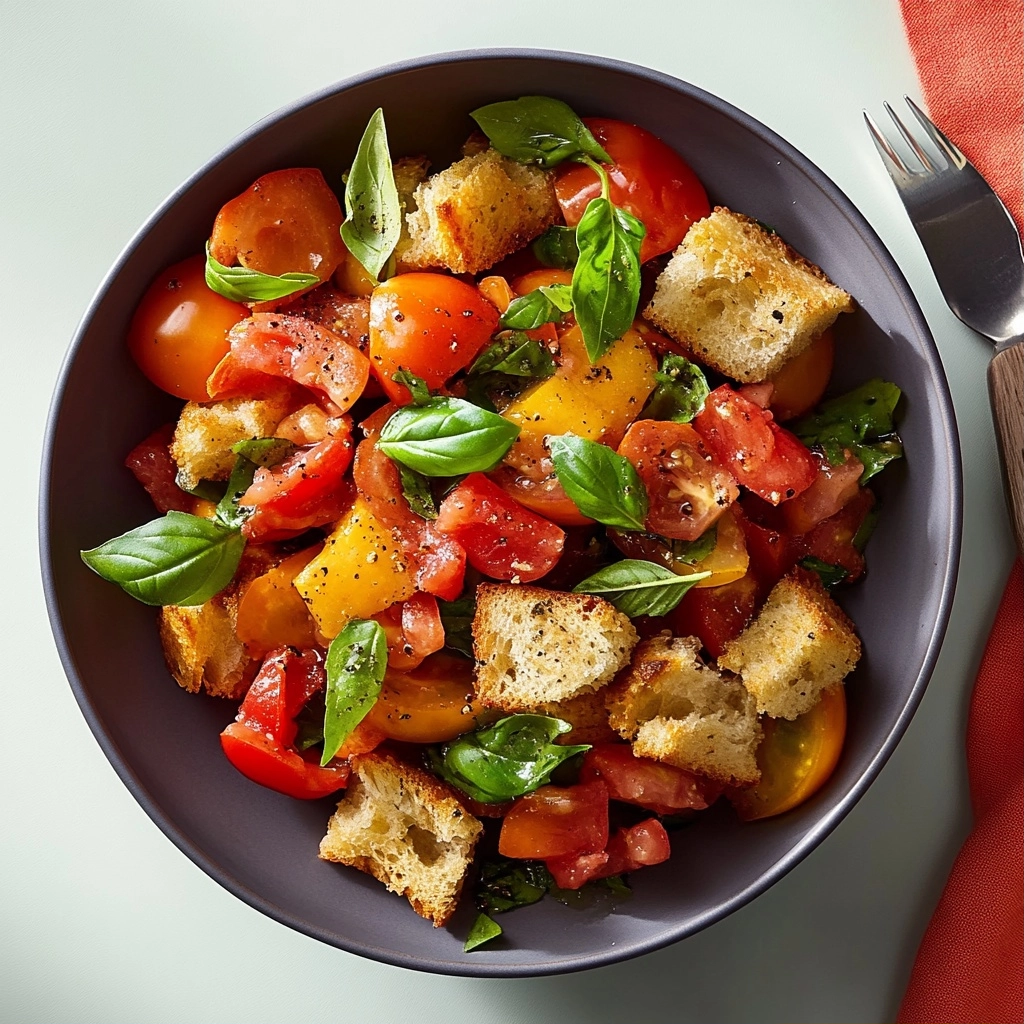
Classic Panzanella Salad with Rustic Italian Bread
Ingredients
Method
- Preheat oven to 350°F (175°C)
- Arrange bread cubes on a parchment-lined baking sheet and roast until golden and crispy, 12-15 minutes
- While bread toasts, combine tomatoes, 1/2 tsp salt, and basil in a bowl; let rest 15 minutes
- Mix olive oil, vinegar, mustard, thyme, parsley, garlic, 1/2 tsp salt, and 1/4 tsp pepper in a jar
- In another bowl, combine roasted bread, red onion, and some chopped basil
- Pour dressing over bread mixture and gently toss to coat with tomatoes
- Let salad rest 30 minutes before serving
Nutrition
Notes
Cherry tomatoes provide natural sweetness and color
Add 1 small cucumber for a refreshing twist
Dress salad just before rest period for ideal consistency
Storage: Keep dressing and croutons separate; assemble fresh for best texture