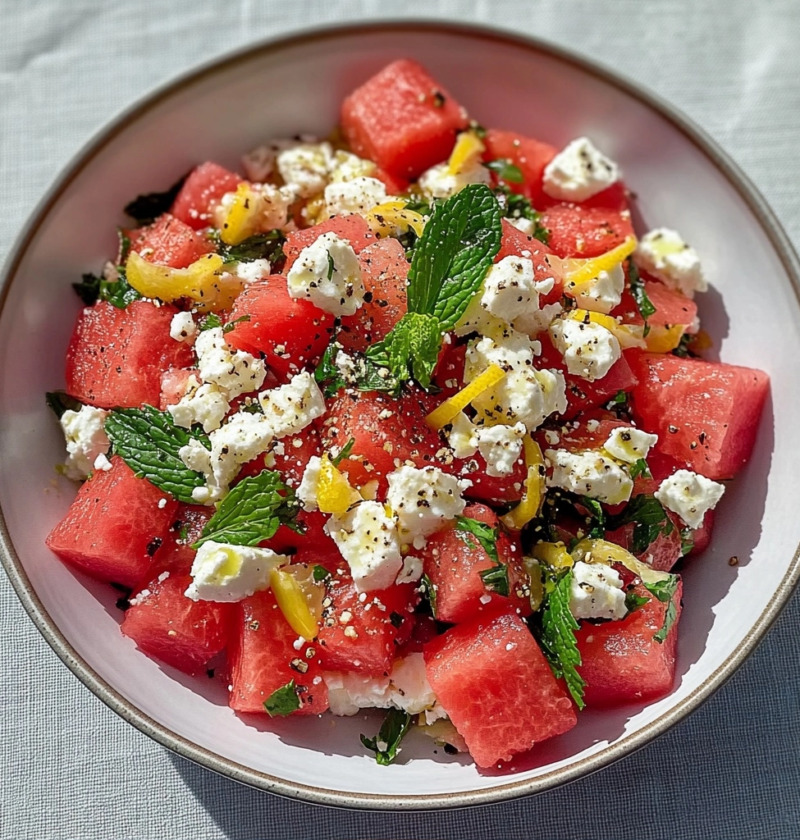
This simple yet vibrant combination brings together the natural sweetness of ripe fruit, the briny creaminess of cheese, and the aromatic punch of fresh herbs. It creates a dish that is perfect for picnics, barbecues, or a light midday meal when you need hydration and flavor without heavy cooking.
| Detail | Information |
|---|---|
| Prep Time | 15 minutes |
| Cook Time | 0 minutes |
| Total Time | 15 minutes |
| Servings | 4 servings |
| Difficulty | Easy |
| Cuisine | Mediterranean |
| Category | Salads |
| Method | Assembly |
Why This Recipe Works
This recipe succeeds because it relies on the fundamental principles of contrast. The sweetness of the fruit perfectly balances the saltiness of the cheese, while the acidity of the lemon juice cuts through the richness of the olive oil. The mint provides a cooling herbal note that prevents the salad from feeling overly heavy.
I have found that using seedless watermelon is crucial for this specific preparation. The absence of seeds means you can eat the salad quickly and without interruption, and the flesh holds its texture better when tossed with vinaigrette. The combination of textures—crisp melon chunks, tender arugula, and crumbling feta—creates a delightful mouthfeel that keeps you coming back for more.
The timing of the assembly is also key. By crumbling the cheese and adding the final drizzle of oil and zest right before serving, you ensure that the feta retains its structure and the mint remains vibrantly green. This dish is incredibly forgiving, but it shines brightest when the ingredients are at their peak freshness, often better than a complicated culinary creation.
This approach mirrors the philosophy behind many successful side dishes found in our collection of fresh options, focusing on high-quality ingredients rather than complex techniques.
Chef Tips for Perfect Results
Always choose a knife that is razor-sharp to ensure you slice through the watermelon with precision and minimal damage to the fruit cells. Dull knives tend to smash the melon, releasing excess juice that can dilute the dressing.
- Temperature matters: For the best flavor profile, use watermelon that is room temperature rather than cold from the refrigerator. Cold fruit can numb the palate, making it harder to appreciate the delicate balance of sweet and salty flavors.
- Cheese balance: Taste your feta before adding salt to the salad. Some high-quality feta is very salty on its own, and if you oversalt the dressing, the final dish will become inedible. Start with a light hand on the seasoning.
- Zest intensity: When chopping the lemon zest, aim for small, uniform pieces. This ensures that every mouthful delivers a burst of concentrated citrus oil, rather than large chunks of rind.
- Plating style: Serving the salad in a wide, shallow bowl rather than a deep bowl exposes more of the fruit and cheese to the air. This allows the flavors to meld slightly while maintaining the crisp texture of the watermelon.
- Mint integration: Roughly chop the mint leaves rather than tearing them. This larger chop releases more aromatic oils into the olive oil, infusing the dressing more effectively.
- Acid balance: The lemon juice should be tangy, but not overpowering. If your watermelon is very ripe and sweet, you might need slightly less acid to maintain the harmony of the dish.
Common Mistakes to Avoid
Even a simple recipe can go wrong if you overlook basic preparation and balance. Understanding these pitfalls will help you achieve a consistently superior result every time you make this dish.
| Mistake | Why It Happens | How to Fix It |
|---|---|---|
| Using oversized watermelon chunks | Cutting fruit too large prevents it from absorbing the dressing. | Chop the watermelon into uniform, bite-sized 1-inch pieces for maximum coverage. |
| Adding cheese too early | Feta cheese can become mushy or lose its structure if it sits in moisture. | Crumble the feta over the salad immediately before serving, just like a garnish. |
| Overdressing the salad | Adding too much oil before tasting leaves no room for salt adjustment. | Toss the melon with just half the oil and seasoning first, then taste and add more if needed. |
| Forgetting the zest | Many home cooks focus only on the juice and miss the aromatic peel. | Finely chop the lemon zest into the mix to add a bright, floral layer of flavor. |
| Using frozen or underripe fruit | Frozen melon lacks the texture of fresh fruit, and underripe melon lacks sweetness. | Select a bright red, symmetrical watermelon with a hollow sound when thumped. |
Variations and Substitutions
While the classic combination is beloved, there are many ways to customize this salad to suit your taste buds or dietary needs without losing the core essence of the dish.
| Ingredient or Element | Substitution or Variation | Impact on Flavor or Texture |
|---|---|---|
| Feta cheese | Goat cheese or Chevre | Results in a tangier, creamier texture with a milder saltiness. |
| Fresh mint | Basil or Cilantro | Basil adds a sweet, anise-like note; cilantro provides a brighter, citrusy kick. |
| Lemon juice | Lime juice | Shifts the acidity level to be slightly more savory and earthy. |
| Arugula | Radicchio or Spinach | Radicchio adds bitterness for contrast; spinach provides a milder, tender green. |
| Watermelon | Cantaloupe or Honeydew | Changes the sweetness profile; cantaloupe is nuttier while honeydew is milder. |
| Olive oil | Avocado oil or Coconut oil | Avocado oil is neutral; coconut oil adds a subtle tropical sweetness. |
| Spice level | Chili flakes or jalapeño | Introduces a smoky heat that pairs beautifully with the melon. |
Serving Suggestions and Pairings
This salad is incredibly versatile and can serve as a standalone light meal or a stunning accompaniment to heartier dishes. Its bright flavors make it an excellent choice for summer gatherings.
- Pair with a grilled lemon chicken breast for a protein-rich dinner.
- Complement with white sandwiches on crusty sourdough for a light lunch.
- Serve alongside roasted tomato soup to add refreshing crunch.
- Make it the star of a Mediterranean mezze platter with olives and pita.
- Add crumbled feta and mint to a grain bowl with farro and roasted chickpeas.
- Accompany with granola topped with yogurt for a breakfast or brunch twist.
- Enjoy as a palate cleanser between heavy courses at a formal dinner party.
- Top with toasted pine nuts or walnuts for added texture and healthy fats.
- Add a light vinaigrette if you prefer a dressier presentation.
- Use as a topping for cornbread or biscuits.
- Mix with cooked pasta for a summer-ready salad with cheese and herb accents.
If you are hosting a larger gathering, consider serving this dish alongside our honey lavender granola, which adds a delightful crunch to the soft fruit and cheese combination.
Make Ahead Options
You can prepare certain elements of this salad up to a day in advance, which is great for busy weekdays or entertaining. The watermelon and arugula should be prepped ahead, but the assembly requires a bit of timing.
The watermelon chunks can be washed, cubed, and stored in an airtight container in the refrigerator for up to 24 hours. However, keep in mind that the fruit may release a small amount of liquid, so it is best to dress it just before serving to maintain the ideal consistency. You can also slice the mint and keep it in a damp paper towel in the fridge so it stays fresh.
If you are making this for a brunch, you can assemble the salad without the final feta crumble and olive oil drizzle the night before. Simply add the cheese and finishing oil in the morning to keep the textures crisp and the presentation appealing.
For the most vibrant flavor, however, I recommend preparing the components fresh on the day of the meal. The interplay between the sharp zest, the cool mint, and the sweet melon is best experienced at its peak performance.
Storage and Reheating
Proper storage ensures that your salad remains delicious and safe to eat for several days. Because there is no cooking involved, handling hygiene is particularly important.
| Method | Duration | Instructions |
|---|---|---|
| Room Temperature | Up to 2 hours | Keep covered and discard any leftovers that have sat out longer than two hours. |
| Refrigerator | 3 to 4 days | Store in an airtight container. The texture will soften, and the watermelon will release juice. |
| Freezer | Not recommended | Freezing watermelon causes ice crystals to form, destroying the juicy texture. |
| Reheating | N/A | This is a raw salad. No reheating is required or recommended. |
| Make Ahead | 1 day prior | Chop melon and store separately from dressing components; assemble right before eating. |
Nutritional Information
Approximate values are based on one serving and may vary depending on exact ingredients and portion size.
| Nutrient | Amount per Serving |
|---|---|
| Calories | 180 kcal |
| Protein | 6 grams |
| Fat | 12 grams |
| Saturated Fat | 3 grams |
| Carbohydrates | 15 grams |
| Fiber | 2 grams |
| Sugar | 12 grams |
| Sodium | 350 mg |
Frequently Asked Questions
Can I make watermelon feta mint salad ahead of time?
Yes, you can prepare the watermelon chunks and chop the mint and lemon zest up to a day in advance. However, it is best to dress the salad and add the cheese just before serving to ensure the watermelon stays crisp and the feta does not become watery.
How do I know when the watermelon is ripe enough for this recipe?
A ripe watermelon will have a deep, even color, a dull (not shiny) rind, and a hollow sound when you thump it with your hand. These characteristics indicate that the fruit is sweet and ready to pair with the salty feta and acid.
Can I use dried mint instead of fresh?
Dried mint is a valid substitute, but the flavor will be much more concentrated and less bright. Fresh mint provides a cooling, aromatic lift that complements the sweetness of the melon much better than dried herbs.
What can I do if the salad is too salty?
If the feta makes the salad too salty, you can add a little more sweetness by sprinkling in a few tablespoons of honey or sugar. The sweetness will help balance the saltiness of the cheese.
Is it okay to eat watermelon that has gone slightly mushy?
For this salad, texture is everything. You should avoid using melon that is overripe or mushy, as it will break down too quickly when tossed with the dressing and ruin the presentation.
Can I use bottled lemon juice instead of fresh?
While fresh lemon juice is preferred for its bright flavor, bottled juice can be used in a pinch. Be aware that bottled juice may lack the aromatic oils of fresh zest and juice, so you might want to increase the amount of zest to compensate.
Conclusion
This watermelon feta mint salad represents the best of summer cooking: simple, refreshing, and utterly satisfying. By mastering the balance of sweet, salty, and acid, you can create a dish that feels special but requires minimal effort. Whether served at a casual barbecue or a relaxed dinner, this salad brings a burst of color and flavor to the table that is sure to please everyone.
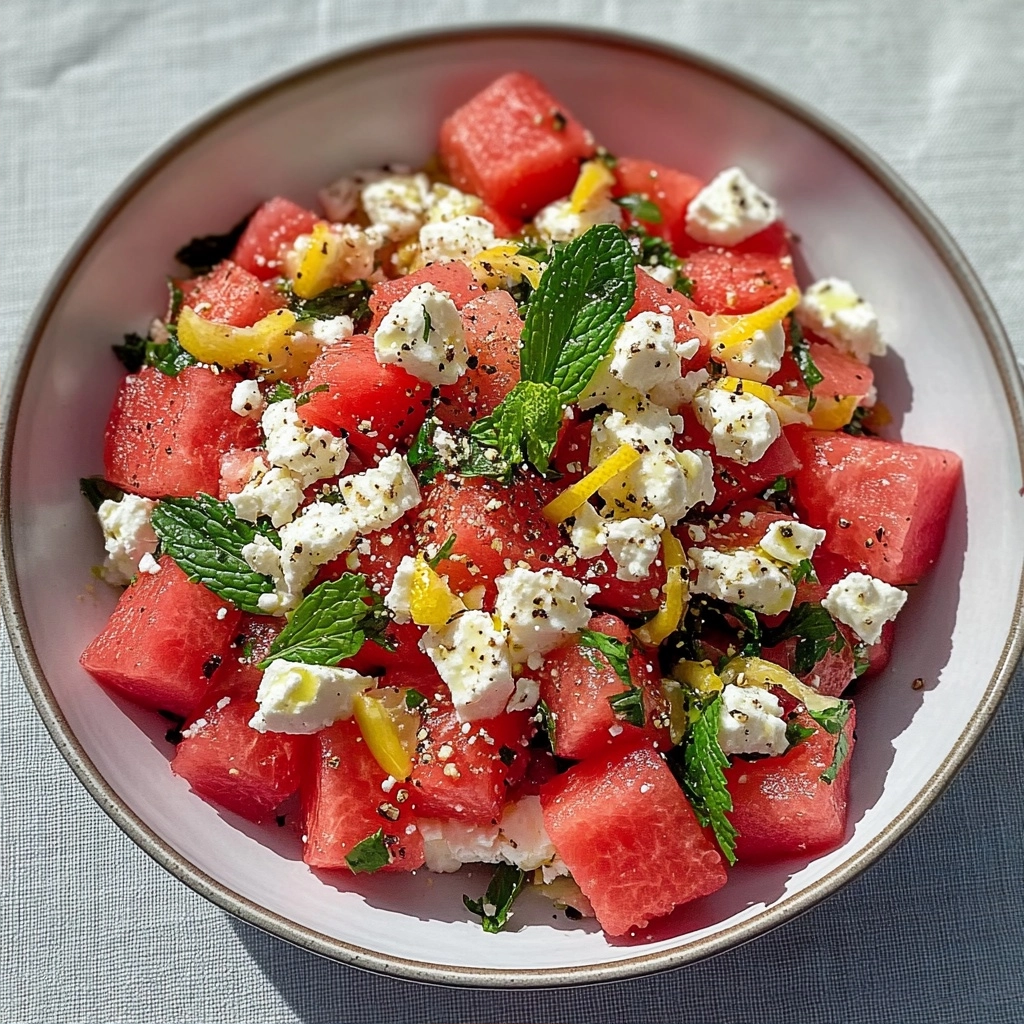
Watermelon Feta Mint Salad: A Refreshing Summer Side Dish
Ingredients
Method
- Use a sharp knife to cube the watermelon, avoiding crushing the flesh.
- Place watermelon in a large bowl and gently stir in arugula and mint.
- In a small bowl, whisk together olive oil, lemon juice, lemon zest, salt, and black pepper to create a vinaigrette.
- Pour dressing over the salad and toss gently, just before serving.
- Sprinkle crumbled feta on top and serve immediately for optimal texture.
Nutrition
Notes
A sharp knife is essential to preserve watermelon structure
Adjust salt to taste if your feta is especially salty
Storage not recommended as ingredients will bleed liquid and wilt