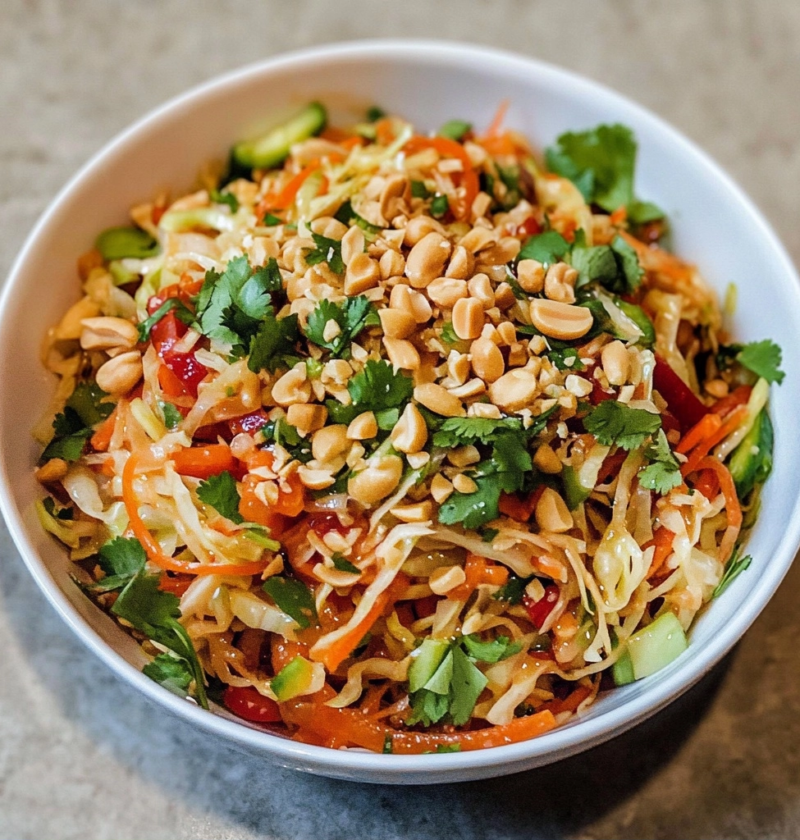
This refreshing Thai peanut salad combines crunchy vegetables with a creamy savory dressing to create a satisfying yet healthy meal. It features a vibrant mix of shredded cabbage, carrots, and fresh herbs tossed in a homemade peanut sauce flavored with lemon and coconut aminos. The dish provides a perfect balance of textures and flavors suitable for warm weather dining.
You will love how quickly this salad comes together using simple whole ingredients that are easy to find at any grocery store. It transforms into a substantial main course when paired with proteins or remains light enough as a side dish for gatherings. The dressing is the star here, bringing umami-rich notes to the crisp greens without overwhelming their natural sweetness.
Prep Time: 15 minutes
Cook Time: 0 minutes
Total Time: 15 minutes
Servings: 4 people
Difficulty: Easy
Cuisine: Thai
Category: Salad
Method: No-Cook
Why This Recipe Works
Our Thai peanut salad succeeds because it prioritizes fresh, raw textures against a rich and tangy dressing that clings perfectly to every bite. The key lies in balancing the fat content of the peanut butter with the acidity from the lemon zest and juice to cut through the richness. This ensures the flavor profile feels vibrant rather than heavy or greasy on the palate.
We use green onions and cilantro to add a bright herbal note that distinguishes this from standard coleslaws or western salads. The inclusion of shredded carrots adds a subtle sweetness and extra crunch that complements the cabbage texture. Roasted peanuts are folded in last to maintain their snap and avoid sogginess from the dressing.
Using coconut aminos provides a soy sauce alternative that reduces sodium while boosting the savory depth found often in Asian cooking. Because there is no cooking required, the vegetables retain maximum nutrients and their natural vitamins stay intact after preparation. This makes the salad a highly nutritious option that supports a healthy lifestyle without sacrificing taste.
Chef Tips for Perfect Results
To achieve the ideal consistency and flavor balance in your salad dressing, focus on the following techniques and ingredient handling strategies.
- Thin the dressing correctly: Whisk water into the peanut butter mixture one tablespoon at a time until it reaches a pourable but not watery consistency suitable for coating greens.
- Prepare vegetables uniformly: Shred the cabbage and carrots into similar thin strips so the mouthfeel remains consistent and the dressing distributes evenly across the salad.
- Reserve garnish: Save a small handful of peanuts and cilantro leaves to sprinkle on top just before serving for a burst of fresh crunch and visual appeal.
- Temper the lemon: Zest the lemon before juicing to ensure you capture the aromatic oils from the peel that enhance the citrus flavor profile significantly.
- Season at the end: Add kosher salt and pepper after tossing the salad to taste so you do not over-salt the dressing if the vegetables release water later.
- Use creamy peanut butter: Select natural creamy peanut butter without stabilizers to ensure the sauce emulsifies smoothly rather than separating or becoming grainy.
- Chill before serving: Let the assembled salad sit in the refrigerator for at least twenty minutes to allow the flavors to meld and the cabbage to slightly soften.
- Warm the water: Use slightly warm water when whisking the peanut butter to help it dissolve faster and blend seamlessly with the lemon juice and honey.
Common Mistakes to Avoid
Avoid these specific errors during preparation to ensure your salad maintains quality, texture, and flavor integrity throughout the meal.
| Mistake | Why It Happens | How to Fix It |
|---|---|---|
| Dressing is too thick | Using too little liquid relative to peanut butter | Add water one tablespoon at a time while whisking vigorously |
| Dressing is too thin | Adding water too quickly or without measuring | Mix in an extra teaspoon of peanut butter to thicken the consistency |
| Vegetables are soggy | Letting the salad sit too long before serving | Toss the dressing with vegetables only right before eating |
| Sauce is too sweet | Using too much honey or overly ripe carrots | Add a squeeze of extra lemon juice to balance the sugar |
| Sauce lacks depth | Missing acidity or umami elements in the mixture | Stir in a splash more coconut aminos to boost savory notes |
| Peanuts are stale | Storing peanuts for too long before using | Check nut freshness before chopping and use roasted salted nuts |
| Herbs wilted | Leaving cilantro near heavy dressing too long | Garnish fresh herbs at the top after tossing for maximum crunch |
Variations and Substitutions
Feel free to customize the main components to fit dietary needs or preference while maintaining the core flavor identity of the dish.
| Ingredient or Element | Substitution or Variation | Impact on Flavor or Texture |
|---|---|---|
| Peanut Butter | Almond Butter | Makes the dish nut-free for some but changes flavor to a milder tree nut profile |
| Honey | Maple Syrup | Keeps the dish vegan while adding a distinct earthy sweetness to the dressing |
| Green Onions | Chives | Provides a slightly sharper onion bite but with a softer green stalk texture overall |
| Cilantro | Italian Parsley | Removes the soapy taste for sensitive palates while offering a grassy fresh note |
| Coconut Aminos | Soy Sauce | Increases sodium content but maintains the essential savory umami backbone of the sauce |
| Cabbage | Kale | Requires massaging the leaves to soften and offers a deeper green earthy flavor |
| Cilantro | Basil | Introduces a sweeter herbal note that pairs well with the citrus in the dressing |
| Red Bell Pepper | Yellow Bell Peppers | Offers similar crunch but with a slightly sweeter and softer taste profile |
| Roasted Peanuts | Tofu Croutons | Eliminates all nuts for allergies while adding a savory protein element to the salad |
Serving Suggestions and Pairings
You can serve this salad alongside various main courses or enjoy it as a standalone meal depending on your hunger levels and dietary goals.
- Toss with grilled chicken thighs marinated in soy and ginger for a complete high protein meal.
- Serve alongside steamed jasmine rice or quinoa to absorb extra dressing and make it more filling.
- Pair with spring rolls that feature fresh herbs for a traditional appetizer and entree combination.
- Add firm tofu cubes for a heartier vegetarian option that stays crisp in the cold dressing.
- Serve next to shrimp skewers grilled over bamboo charcoal for a smoky contrasting flavor element.
- Enjoy with baked salmon for a balanced dinner featuring omega-3 fatty acids and fresh greens.
- Serve with crusty garlic bread for a fusion style meal that adds a crunchy carbohydrate element.
- Top with crispy wonton strips for added texture variety and a savory snackable component.
- Make a wrap using the salad filling and lettuce leaves for a handheld lunch option.
- Serve in hollowed out tomato halves for a colorful presentation at summer outdoor parties.
- Pair with fresh coconut water to hydrate and cool the palate during a warm evening meal.
- Accompany with ginger tea to aid digestion after consuming the rich nutty dressing.
A complete meal idea would involve the Thai peanut salad served next to a bowl of spicy miso soup and a side of edamame beans for a balanced Asian-inspired afternoon dinner.
Make Ahead Options
You can prepare most components of this Thai peanut salad a day in advance if you store the dressing separately from the vegetables. The salad greens and shredded vegetables hold up well in the refrigerator for up to 24 hours without losing significant crunch.
The peanut dressing can be whisked up to three days ahead and kept in an airtight jar in the refrigerator to maintain its consistency. When ready to serve, simply whisk the dressing again to re-emulsify and toss it with the fresh vegetable mix just before dining.
Storage and Reheating
Reheating is not necessary for this cold salad, but proper storage ensures freshness and food safety for leftovers.
| Method | Duration | Instructions |
|---|---|---|
| Room Temperature | 1 hour | Keep covered on the counter but do not leave for longer to prevent bacterial growth |
| Refrigerator | 3 days | Store in an airtight container in the coldest part of the refrigerator to maintain freshness |
| Freezer | Do not freeze | The vegetables will become mushy and the dressing will separate if frozen |
| Reheating | N/A | Do not heat this salad as the vegetables are best served cold for texture contrast |
| Make Ahead | 24 hours | Store dressing and vegetables in separate containers until ready to toss and serve |
For best results, ensure you wrap all stored ingredients securely to prevent them from absorbing odors from other foods in the refrigerator.
Nutritional Information
Approximate values are based on one serving and may vary depending on exact ingredients and portion size.
| Nutrient | Amount per Serving |
|---|---|
| Calories | 280 |
| Protein | 12 grams |
| Fat | 20 grams |
| Saturated Fat | 4 grams |
| Carbohydrates | 15 grams |
| Fiber | 5 grams |
| Sugar | 10 grams |
| Sodium | 180 milligrams |
Frequently Asked Questions
Can I use natural peanut butter in the dressing?
Yes, you can use natural peanut butter in the dressing to create a less processed option for this Thai peanut salad recipe. Ensure you stir the jar well before measuring to mix any separated oil back into the paste for a consistent texture.
How do I know the cabbage is fresh enough to eat raw?
Check the cabbage leaves for a crisp snap and bright green color without any wilted brown spots or slimy texture on the outer layers. Fresh cabbage should feel heavy for its size and should not have yellowing or soft patches indicating spoilage.
What should I do if the salad dressing is too salty?
Immediately add more water or lemon juice to dilute the salt concentration while whisking to maintain the emulsion of the sauce. You can also add a little extra honey or coconut aminos to balance the intense savory flavor without adding more salt.
Can I freeze this salad for later consumption?
Freezing is not recommended for this salad because the high water content in the cabbage and carrots will cause them to turn mushy upon thawing. The peanut dressing will also likely separate and lose its creamy texture once frozen and thawed.
What proteins pair best with this peanut sauce?
Grilled chicken, shrimp, or tofu are the best protein additions to complement the savory and nutty flavors of the peanut sauce in the salad. These options add substance without overpowering the fresh vegetables and bright citrus notes present in the dish.
How long can I store the leftovers in the refrigerator?
You can store the leftovers of this Thai peanut salad in an airtight container in the refrigerator for up to three days. Always check for any off smells or slimy textures before consuming after the first day to ensure food safety and quality.
For more inspiration on healthy dinner ideas, consider exploring recipes that feature healthy chicken salads for another light and nutritious meal option.
Conclusion
This Thai peanut salad delivers the perfect mix of crunchy textures and savory-sweet flavors that anyone at your table will love. The simplicity of the ingredient list makes it accessible for home cooks looking to add a vibrant fresh meal to their weekly rotation. We hope you enjoy this delicious Thai peanut salad as a refreshing and satisfying option for your busy weeknight dinners.
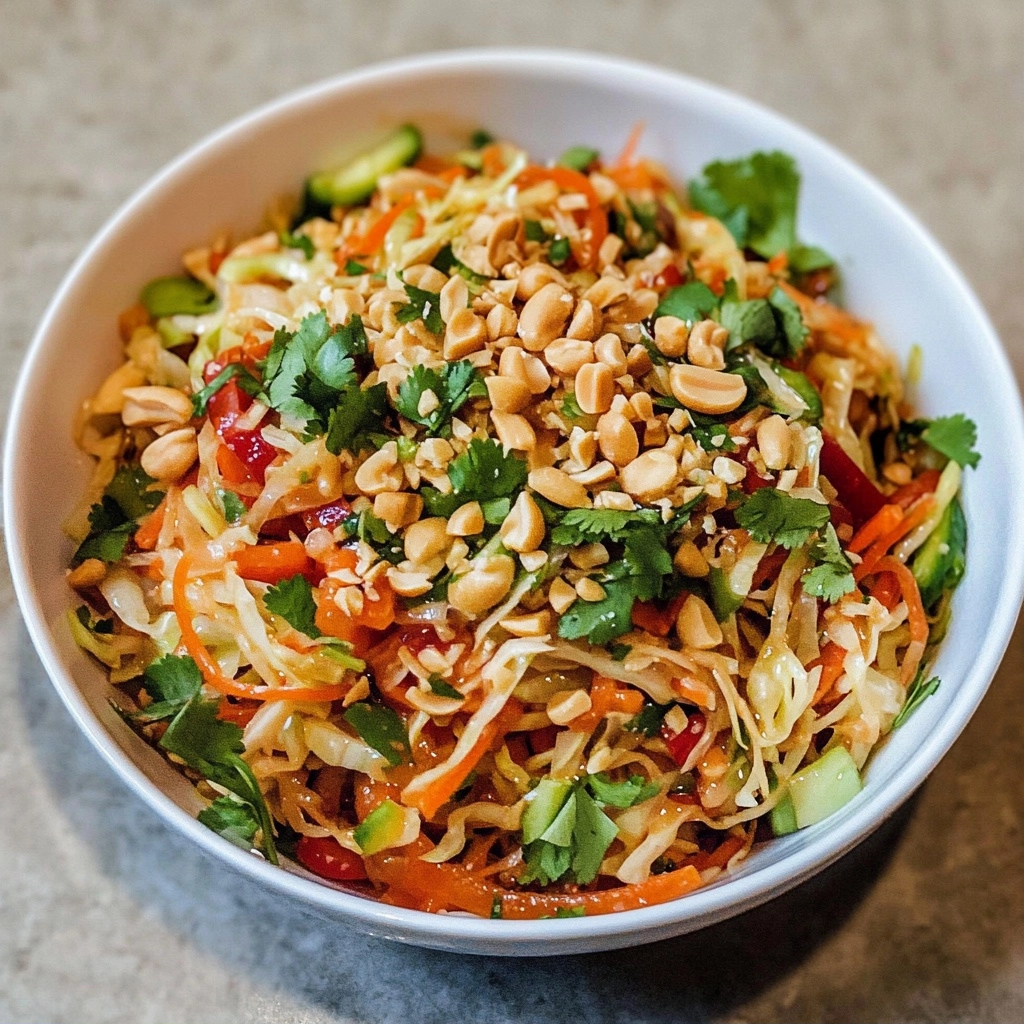
Delicious Thai Peanut Salad Recipe for Fresh Dinners
Ingredients
Method
- 1. Combine cabbage, carrots, green onions, and cilantro in a large bowl.
- 2. In a separate jar, whisk together peanut butter, coconut aminos, lemon juice, sesame oil, water, and lemon zest until smooth.
- 3. Pour dressing over salad and toss until evenly coated.
- 4. Fold in 1/4 cup roasted peanuts just before serving.
- 5. Garnish with additional peanuts and cilantro for freshness.